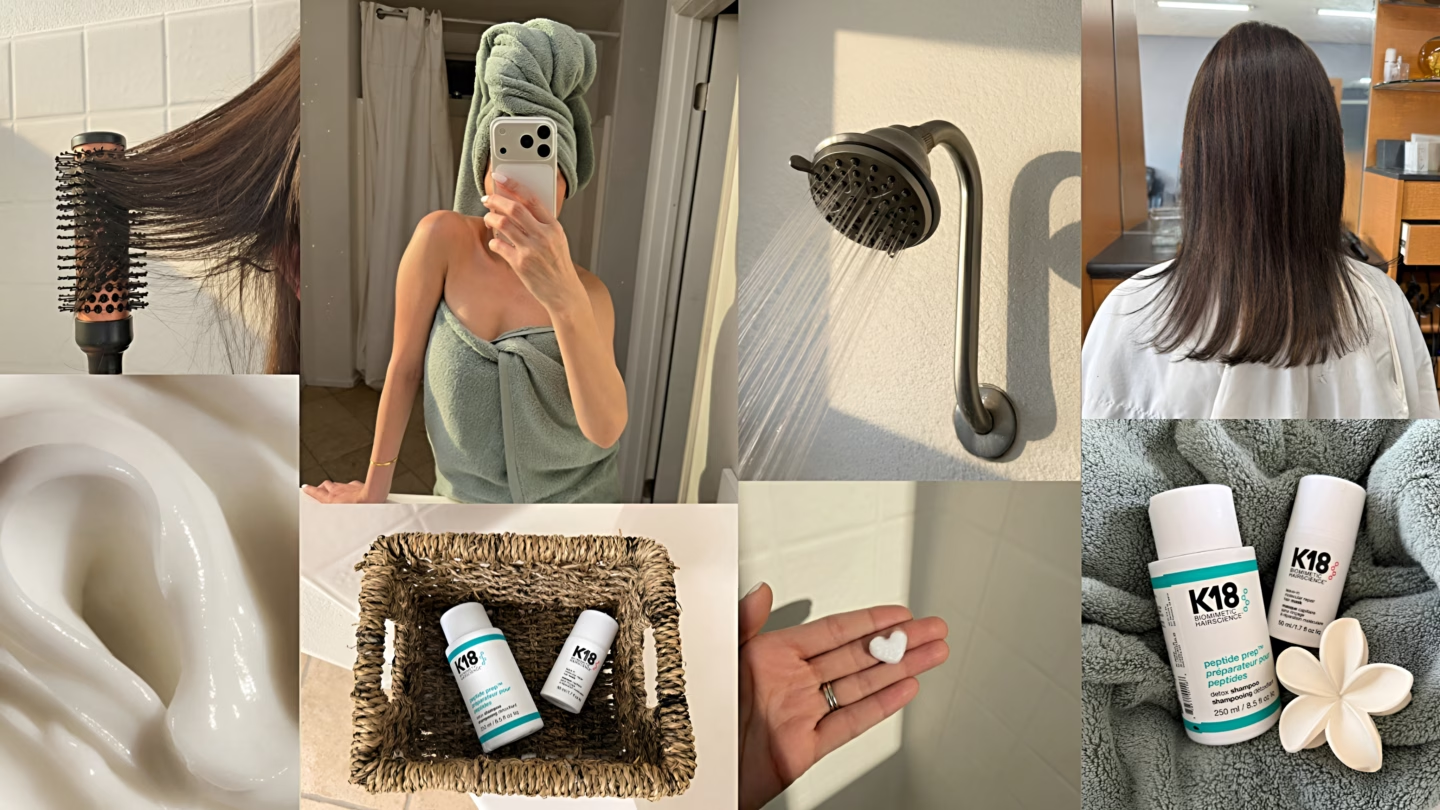
Key Takeaways
- My brunette “baby highlights” appointment in February 14th, 2026, went completely wrong—excess bleach left me with a blondish result and visible hair breakage that made me want to cry every time I looked in the mirror.
- A second, more experienced stylist used K18 in-salon to safely correct my color and introduced me to the Peptide Prep Detox Shampoo and Leave-In Molecular Repair Hair Mask as my at-home repair protocol.
- After one month of consistent use (started with a sample size from Sephora), my hair feels noticeably stronger, less frizzy, and K18 is now essential in my recovery routine.
- This post compares the 2 core K18 repair products—the Detox Shampoo and Leave-In Mask—with detailed breakdowns of how I actually use them together and who I genuinely recommend them for.
- K18 isn’t a miracle cure, but it made such a difference in moving me from panic to progress after a devastating salon experience.
My Bleach Disaster & How I Ended Up With K18
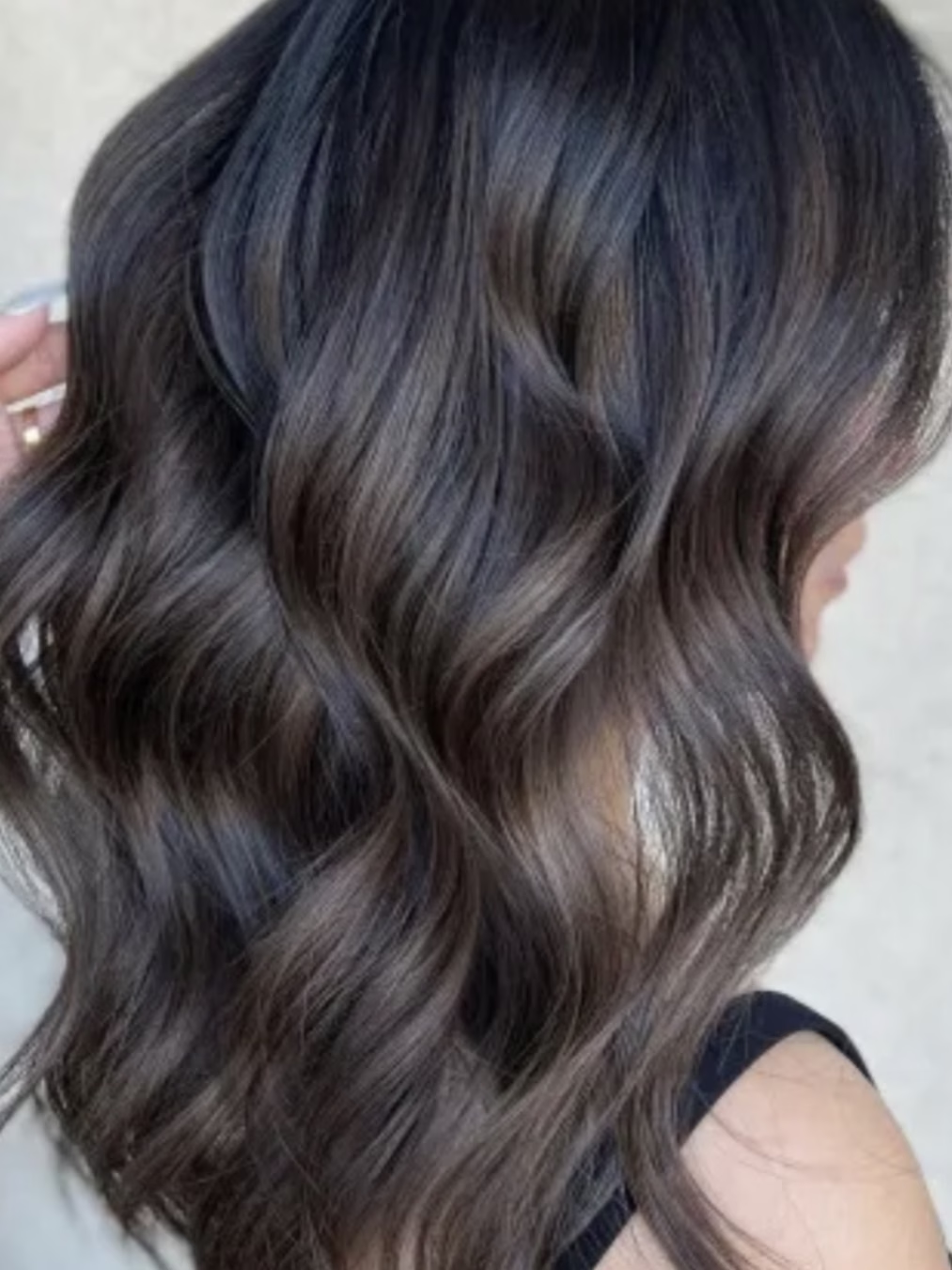
I walked into my hair appointment in February 2026 feeling excited. I had a photo of subtle baby highlights on brunette hair—my natural baby hair color—and complete trust in a stylist I’d seen three times before. I thought I knew what I was getting.
What I got was nothing like that photo.
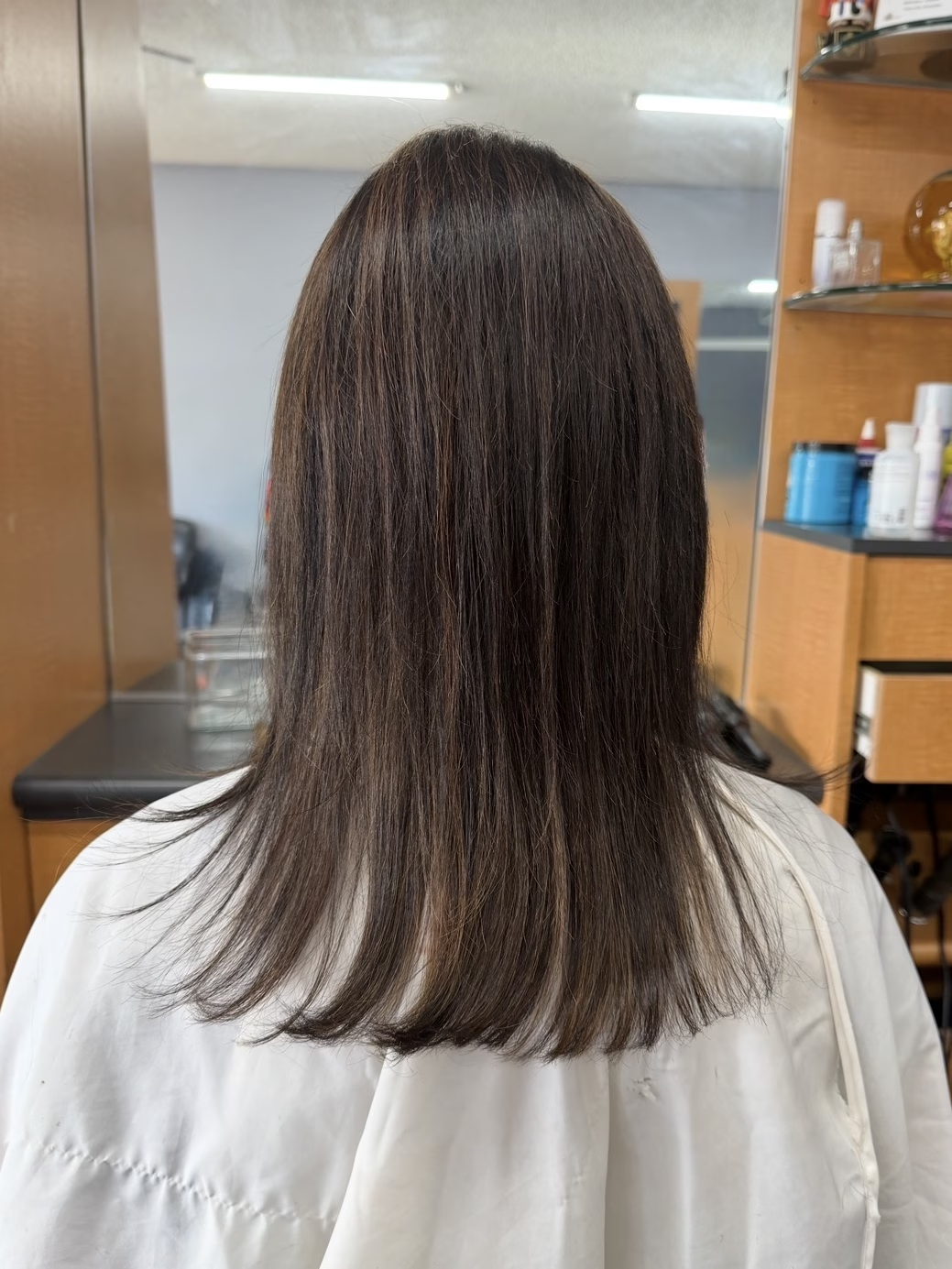
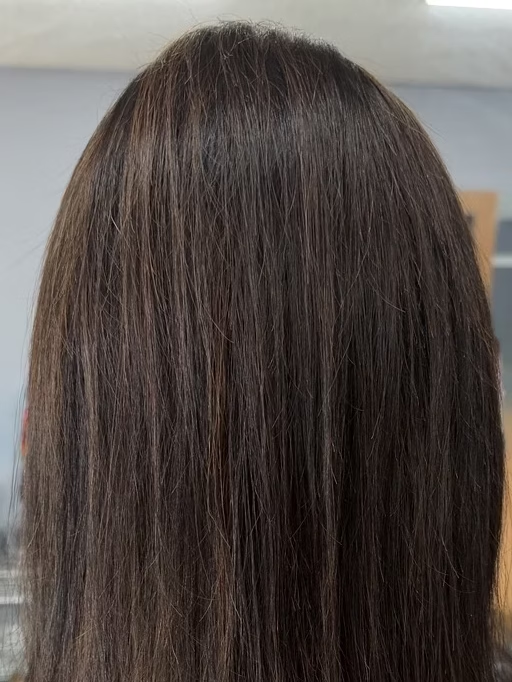
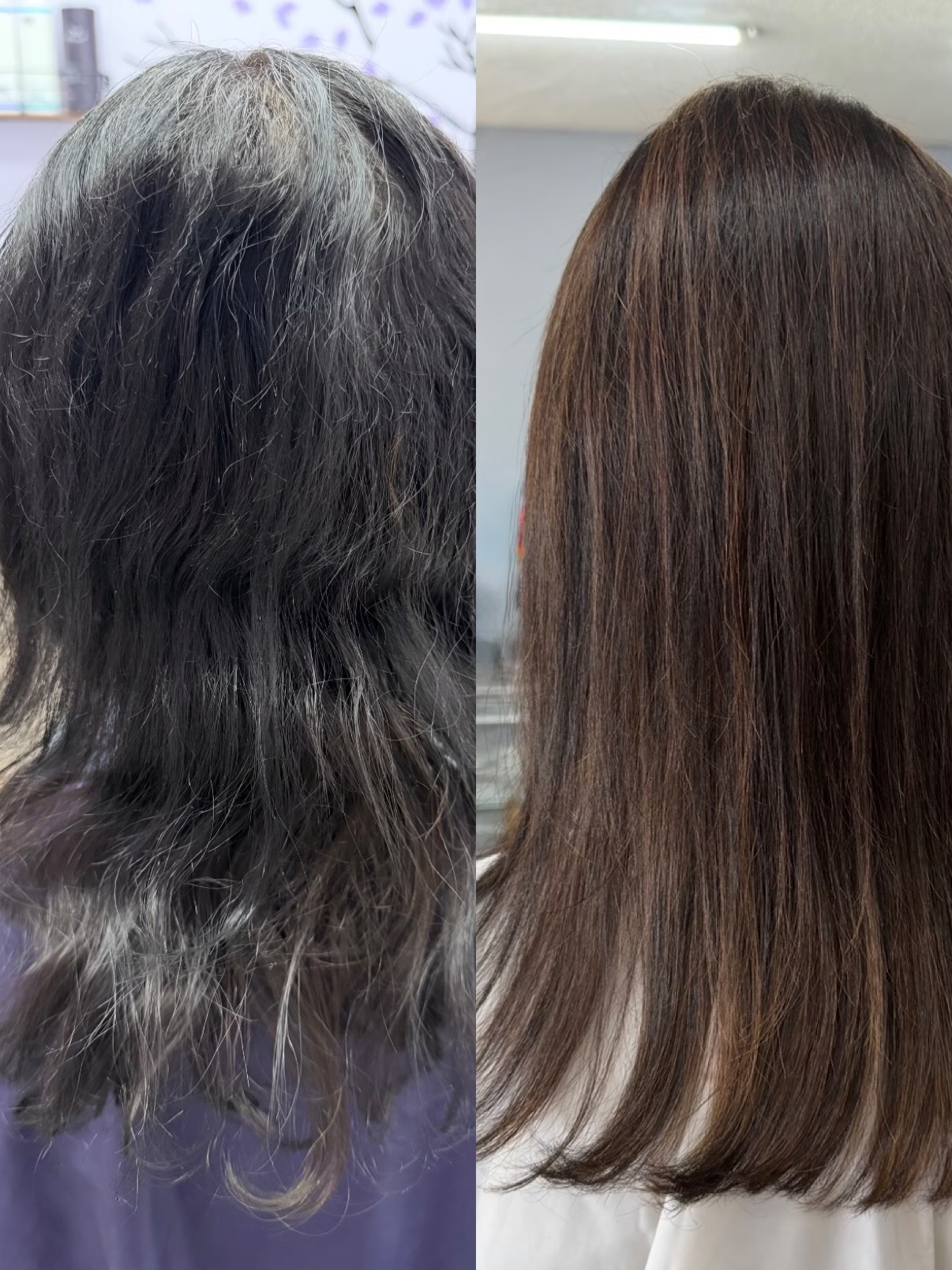
She used excess bleach and, I believe, left it on longer than she should have. When she spun me around in that chair, I looked blondish. My brunette was gone, replaced by something brassy. It looked good when styled. The days passed by, and my hair felt like straw between my fingers. The hair was obviously damaged—my strands felt rough and stretchy when wet, and I noticed breakage around the crown and back of my head. It happened slowly, and eventually the back of my hair broke. I can’t believe I paid for this.
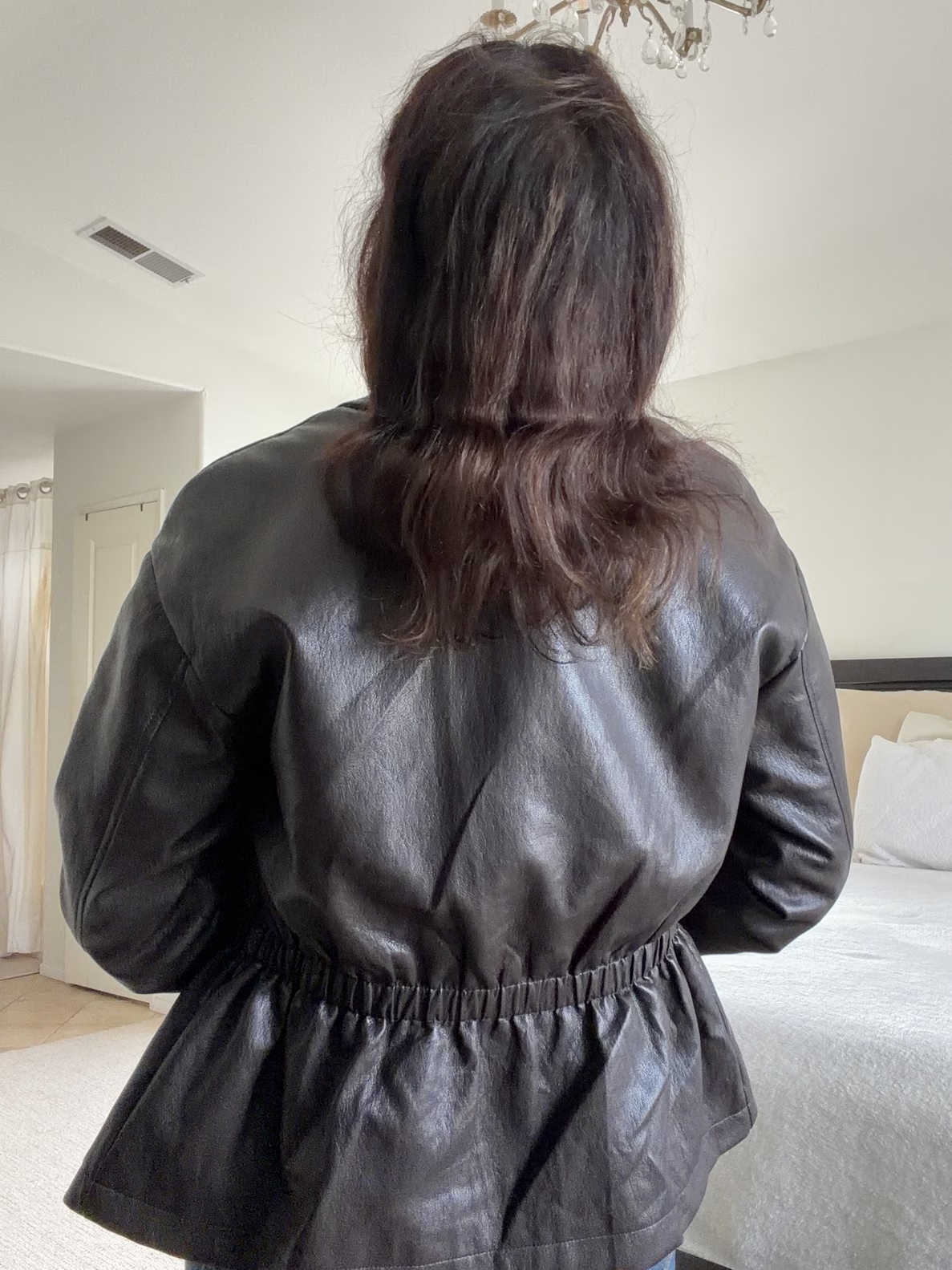
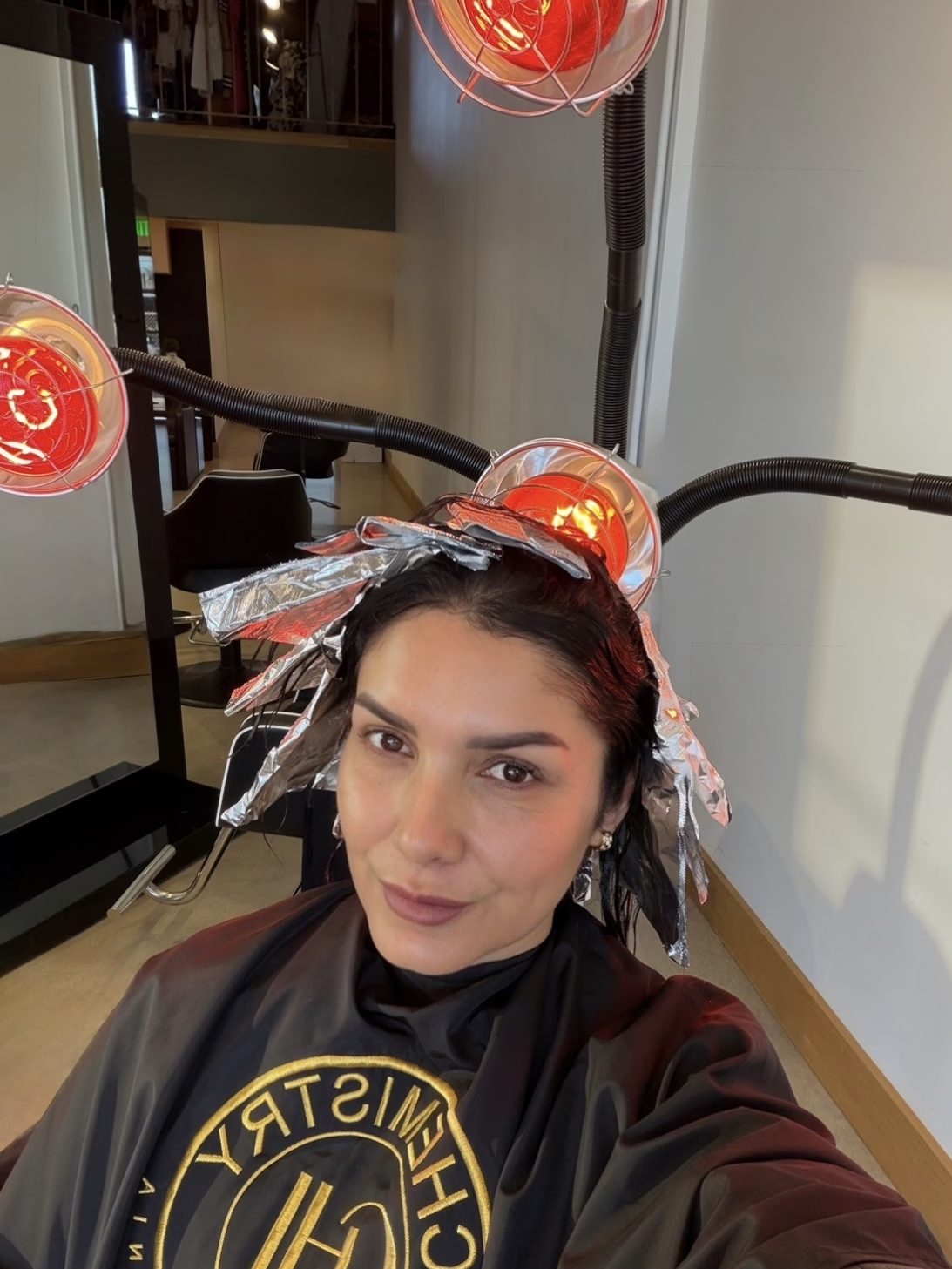
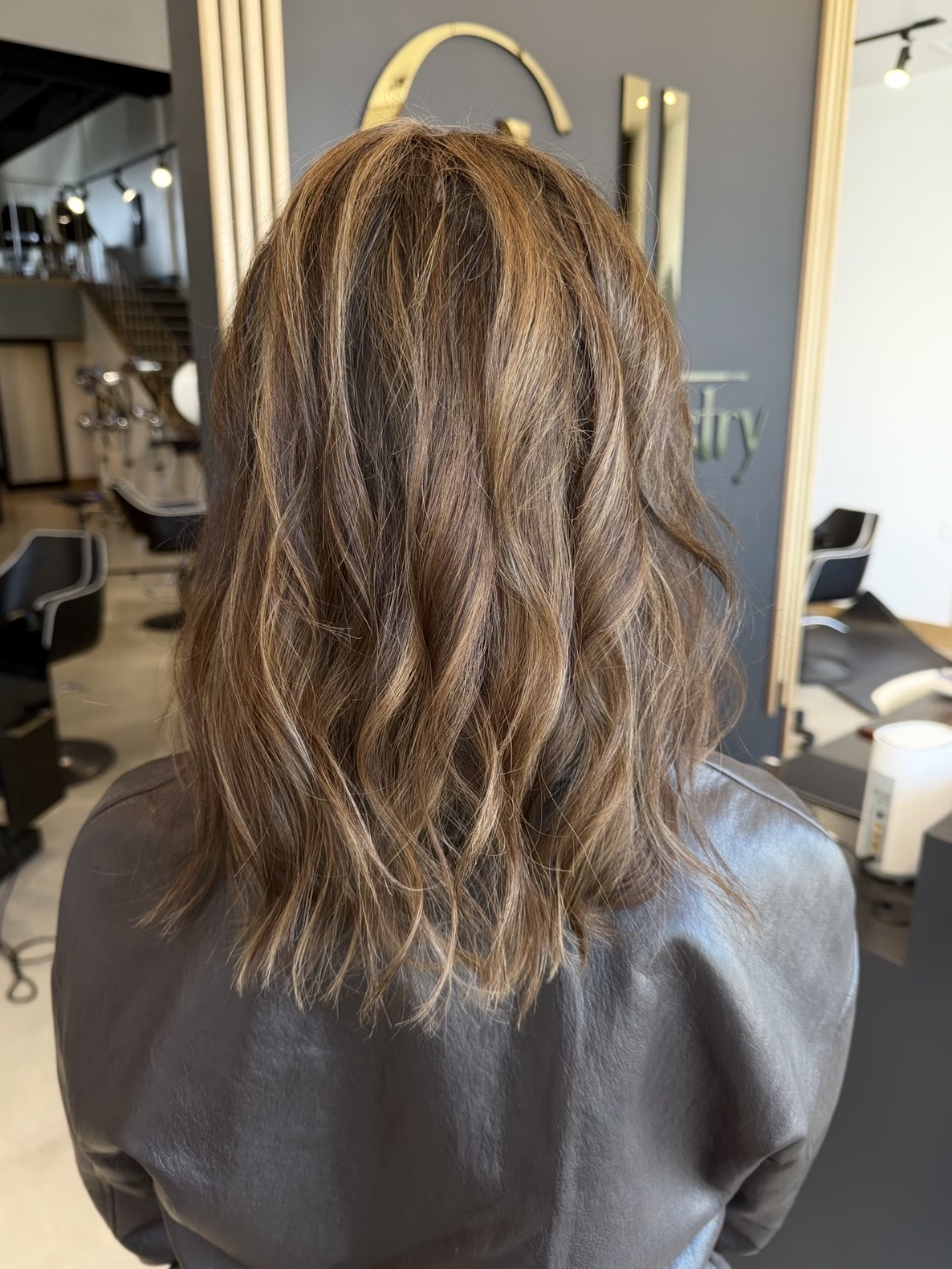
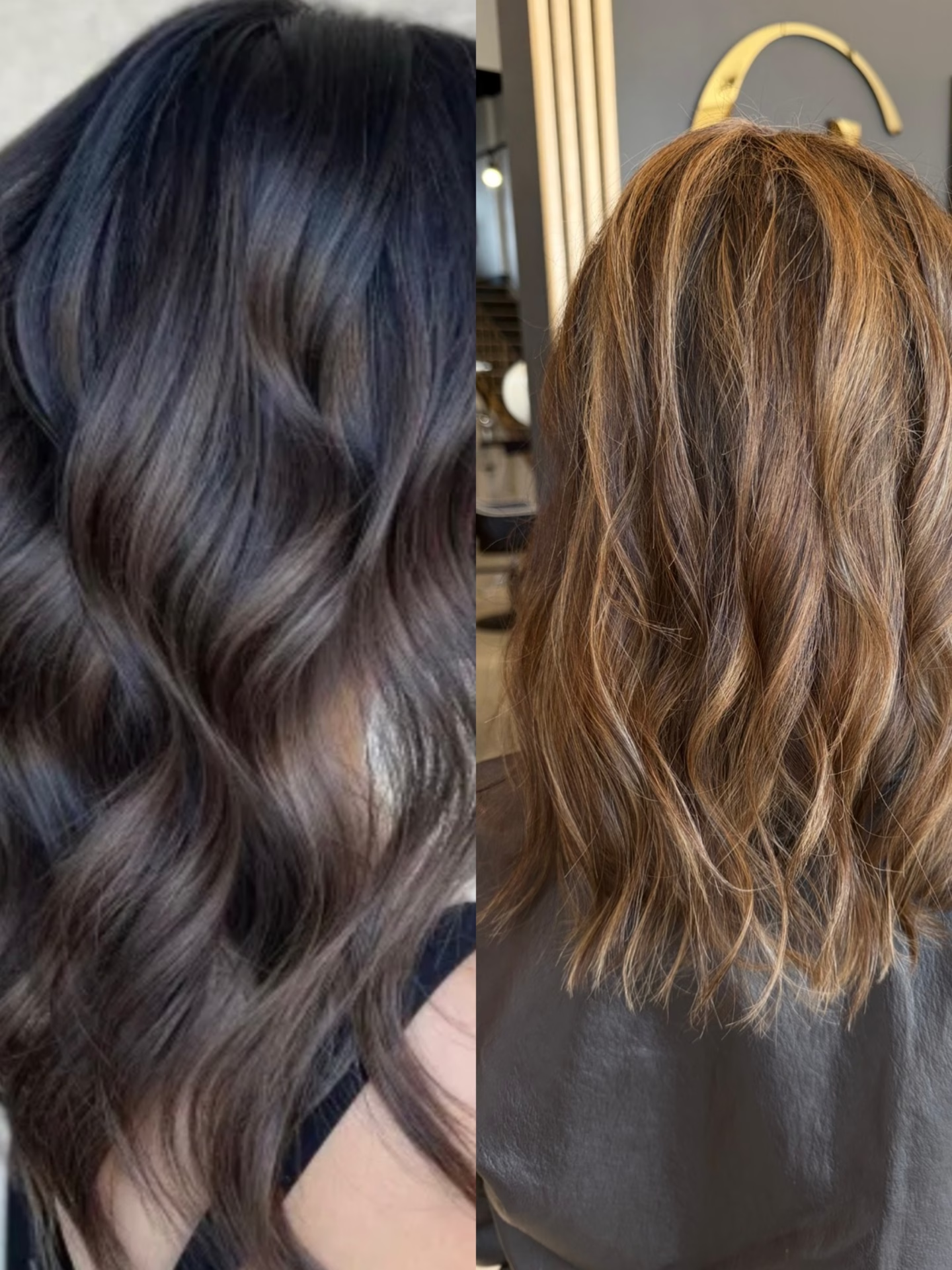
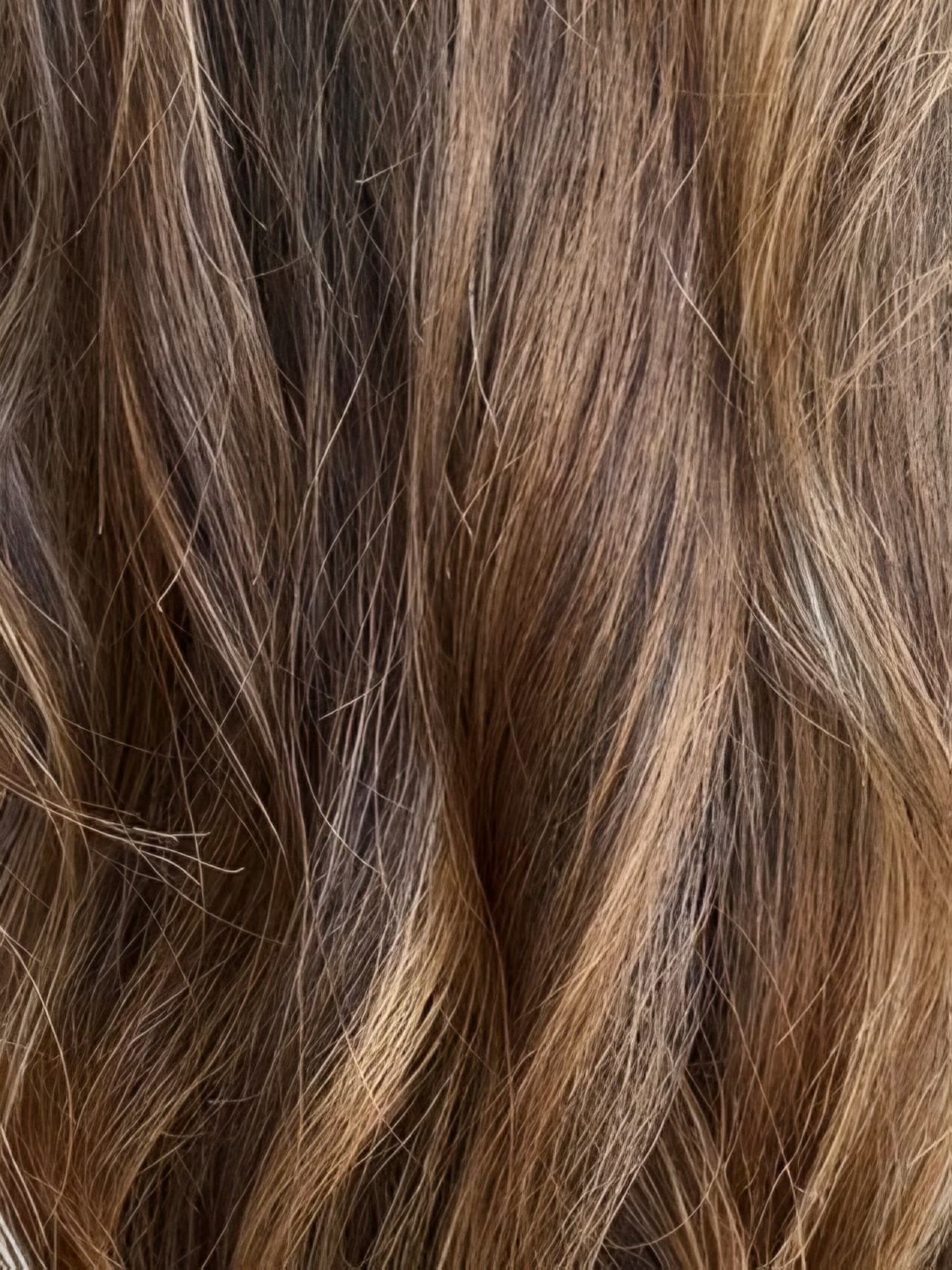
I kept my hair in buns and clips only—I couldn’t bear to look at it down. Then, a couple weeks later, I went to Sally Beauty and bought Wella 4NN, the same shade I use on my greys, and colored all my hair to darken everything back to something resembling my natural color.
The result? Too dark. Flat. Not at all like my inspiration photo.
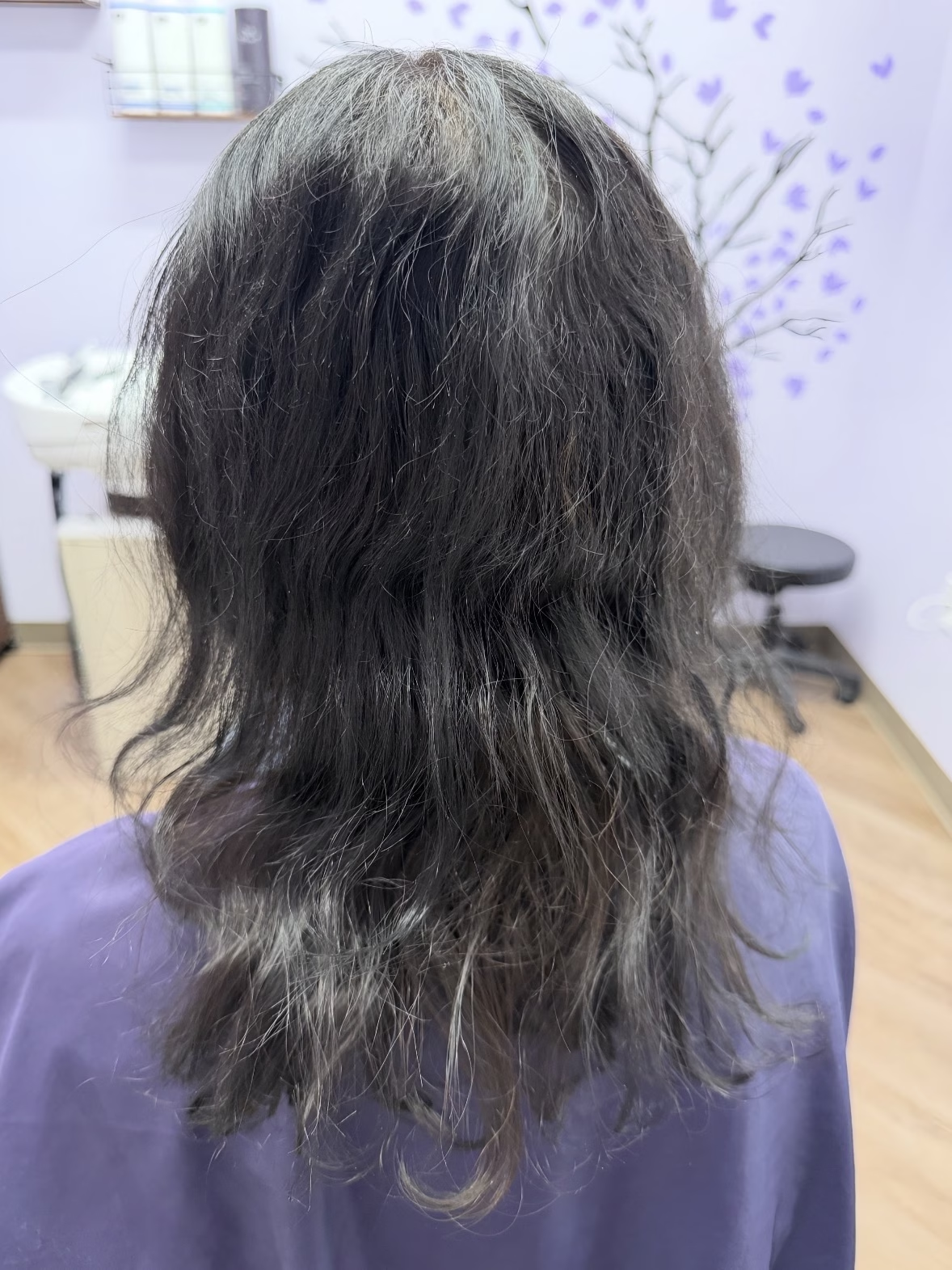
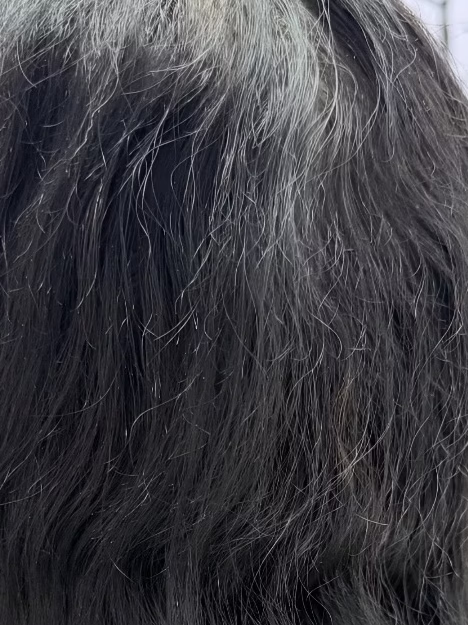
So three weeks later, I booked with a different stylist, hoping she could correct my color and get me closer to those original baby highlights I’d wanted.
Her consultation was honest and a little scary. She told me my hair was already compromised from the over-bleaching and the subsequent dye. More bleach would be risky. But she agreed to proceed carefully, checking my hair every 2-3 minutes during processing.
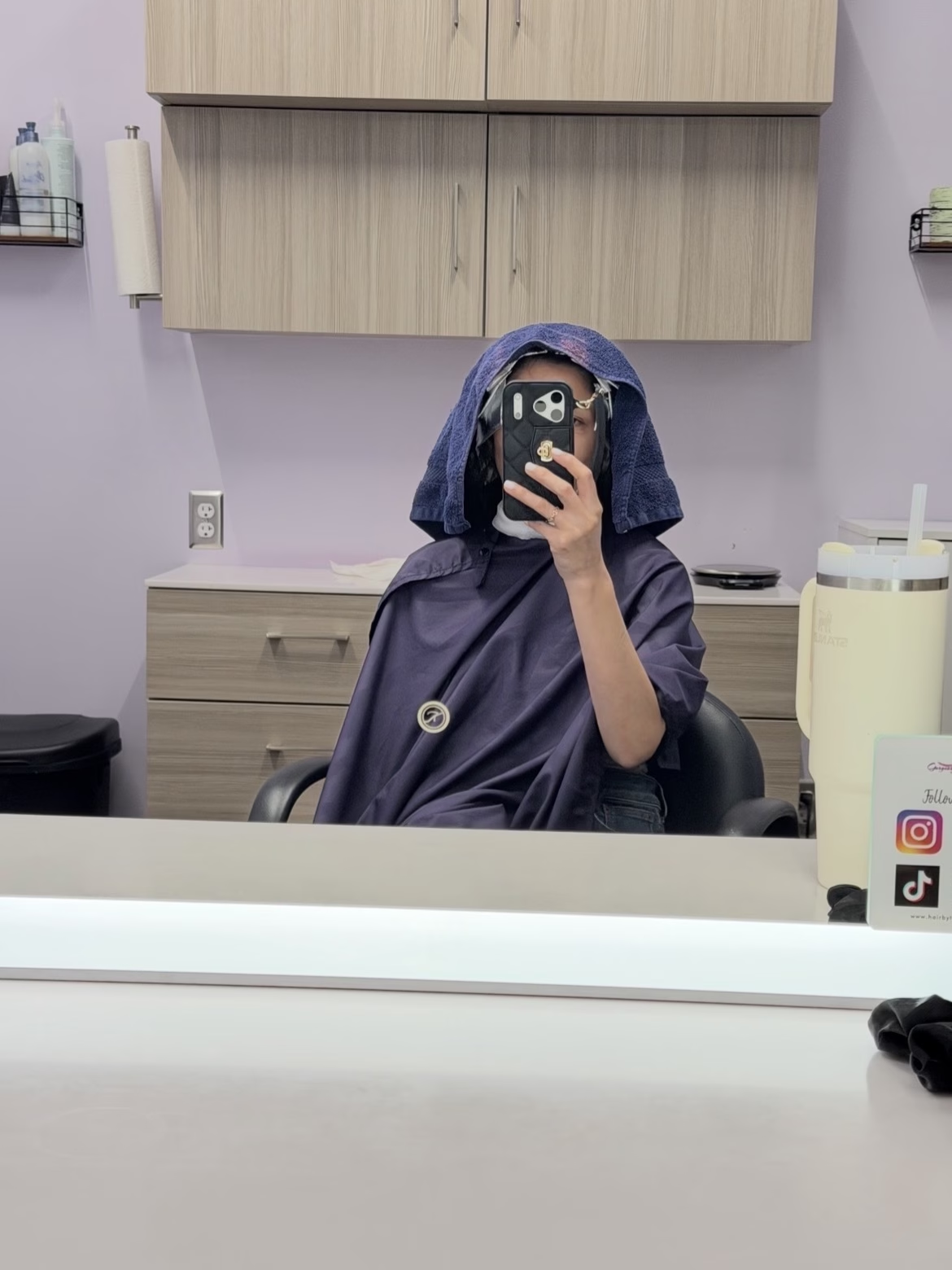
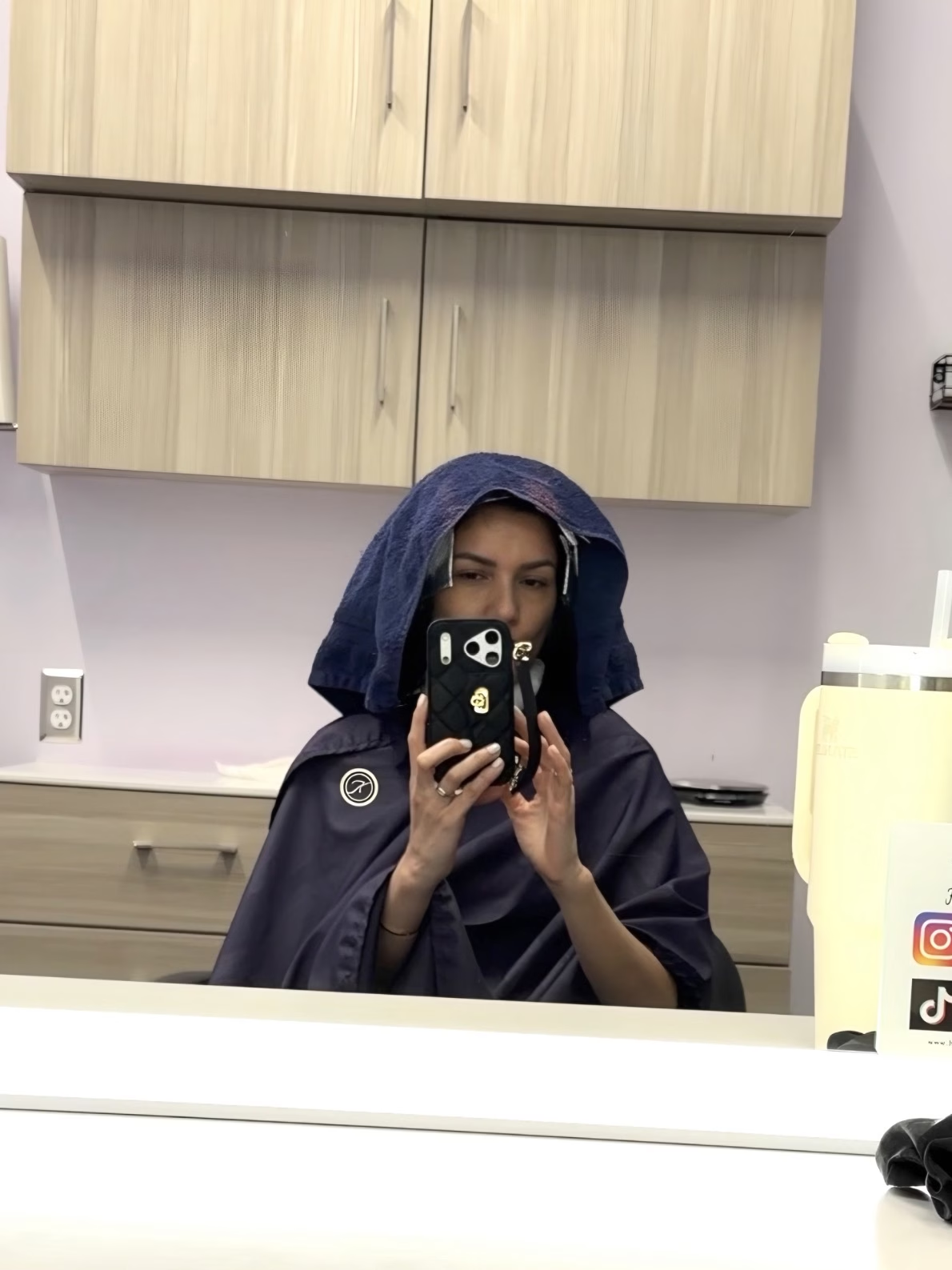
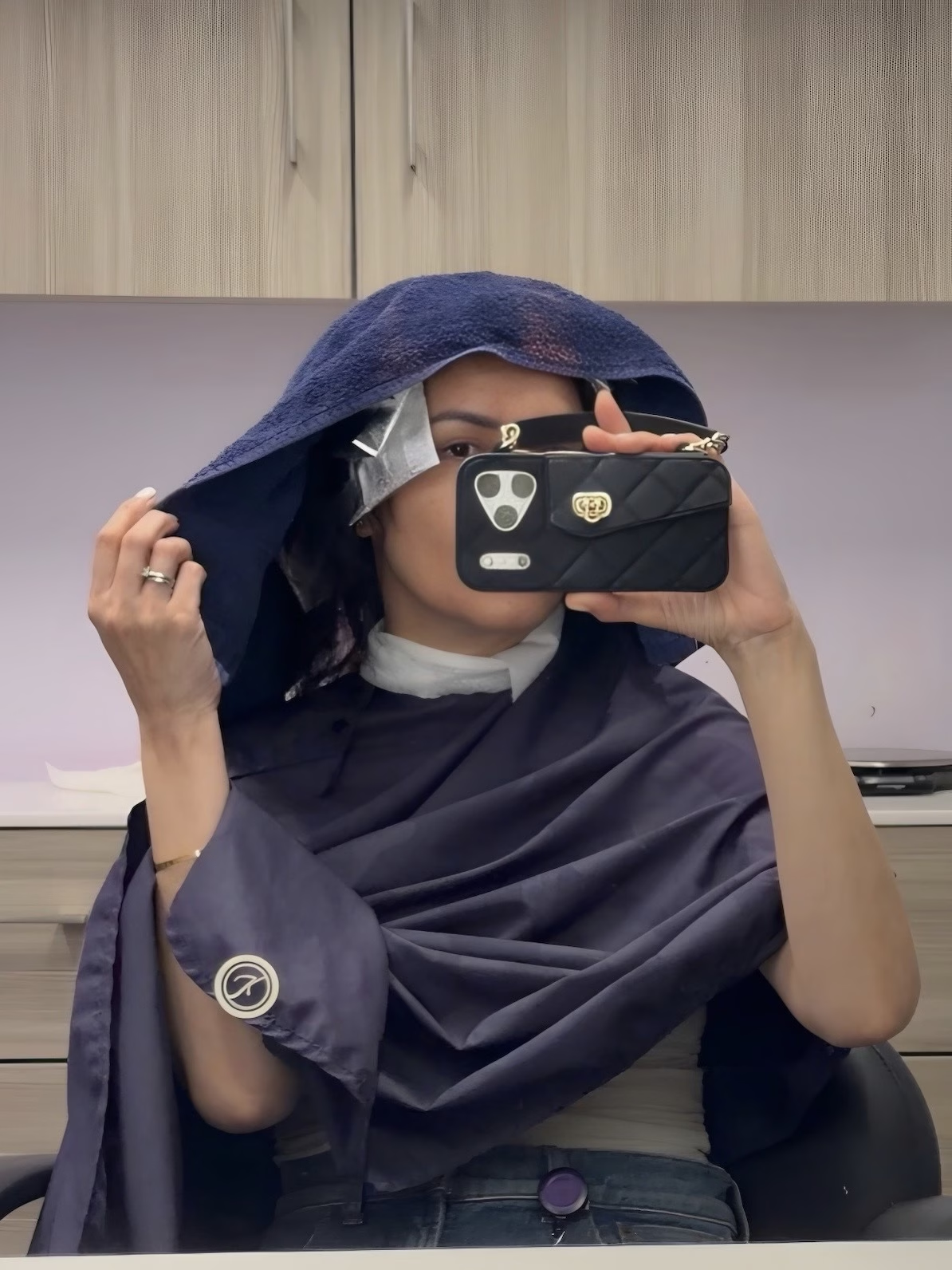
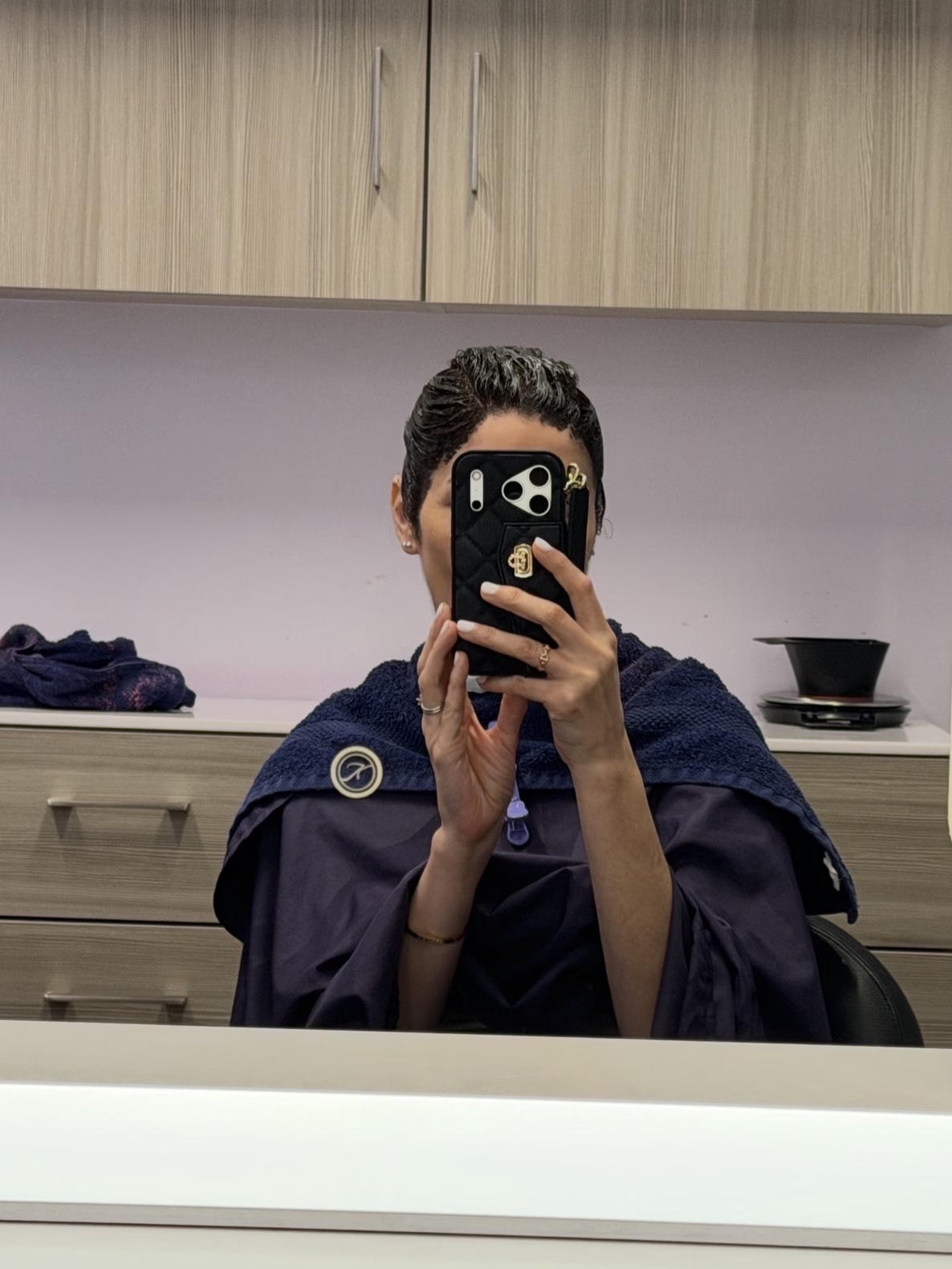
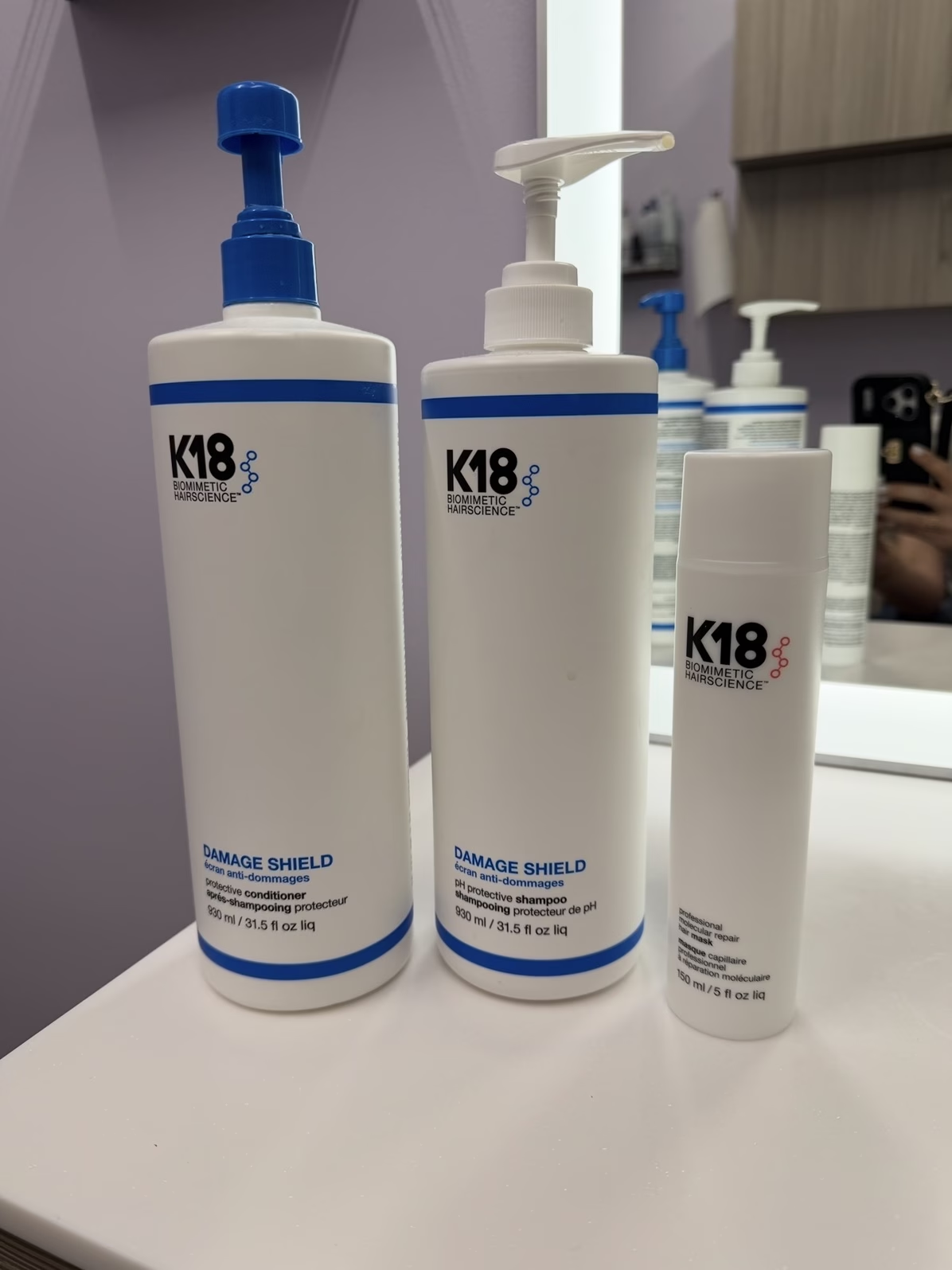
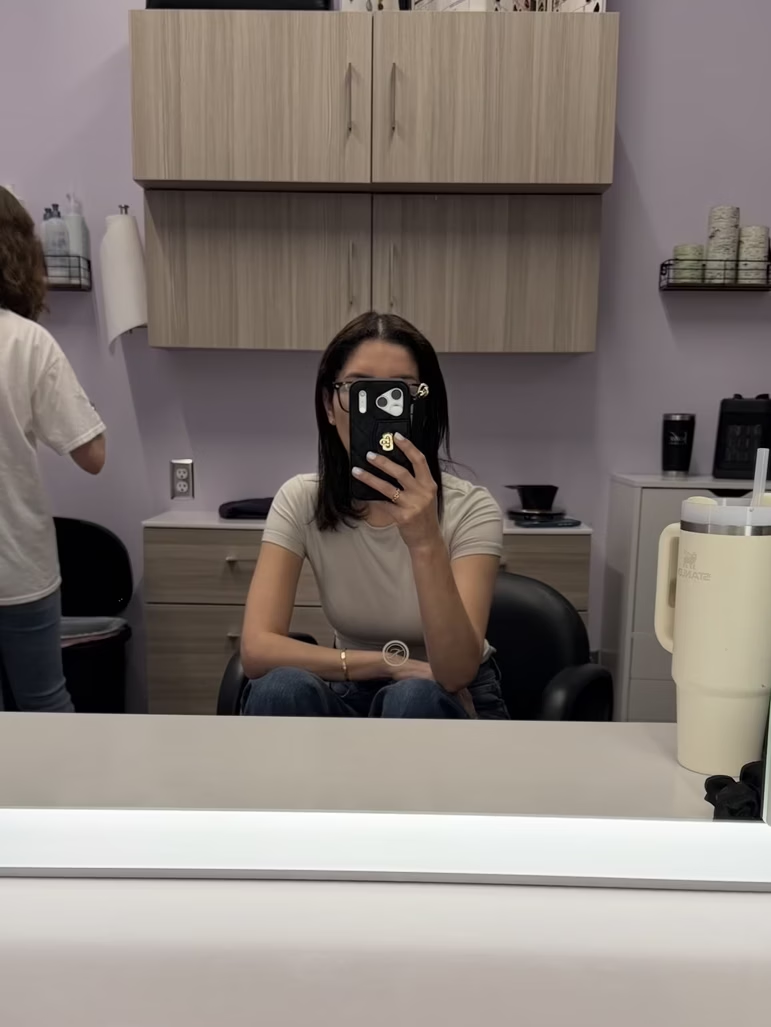
She did subtle baby highlights again, managing to lift the darkness without snapping all my hair off. And here’s the turning point: she used K18 during the corrective session. When I sat up from the bowl, she told me this treatment was going to help my hair, and she recommended I continue using it at home.
I left her salon and immediately drove to Sephora. I bought the sample size of K18 that same day. My hair journey to recovery had officially begun.
What Is K18 & Why Everyone Talks About It
K18 is a biotech-driven hair repair line that launched in the early 2020s, built entirely around a patented K18PEPTIDE that targets internal hair damage at a molecular level.
This isn’t your typical coating mask or a regular deep conditioner leaves you with a temporary smoothness. K18 is designed to reconnect broken keratin chains and restore disulfide bonds broken during chemical services like bleaching. It mimics hair’s structure at the natural building blocks level, slipping into the hair shaft to work from the inside out.
The line went viral with billions of TikTok views by 2023-2024, specifically because of its “4-minute repair” claim. People with bleach and color damage were seeing noticeable results, and the word spread fast.
Here’s the simple explanation: the K18PEPTIDE is a biotech developed peptide that works similarly to the keratin proteins your hair already has. It penetrates the hair cuticle and reaches the cortex—where structural damage actually happens—to help reconnect broken polypeptide chains. This restores strength, elasticity, and bounce at a deeper level than surface-coating products.
I’ll be honest: I was initially nervous about the alcohol content I’d read about. But the brand uses specific alcohols like cetearyl alcohol and benzyl alcohol to create the right hair environment for the peptide to work. On my damaged hair, they did not feel drying at all. Isopropyl alcohol serves a different function than drying alcohols, and the formulas minimal approach to ingredients made sense once I understood the science.
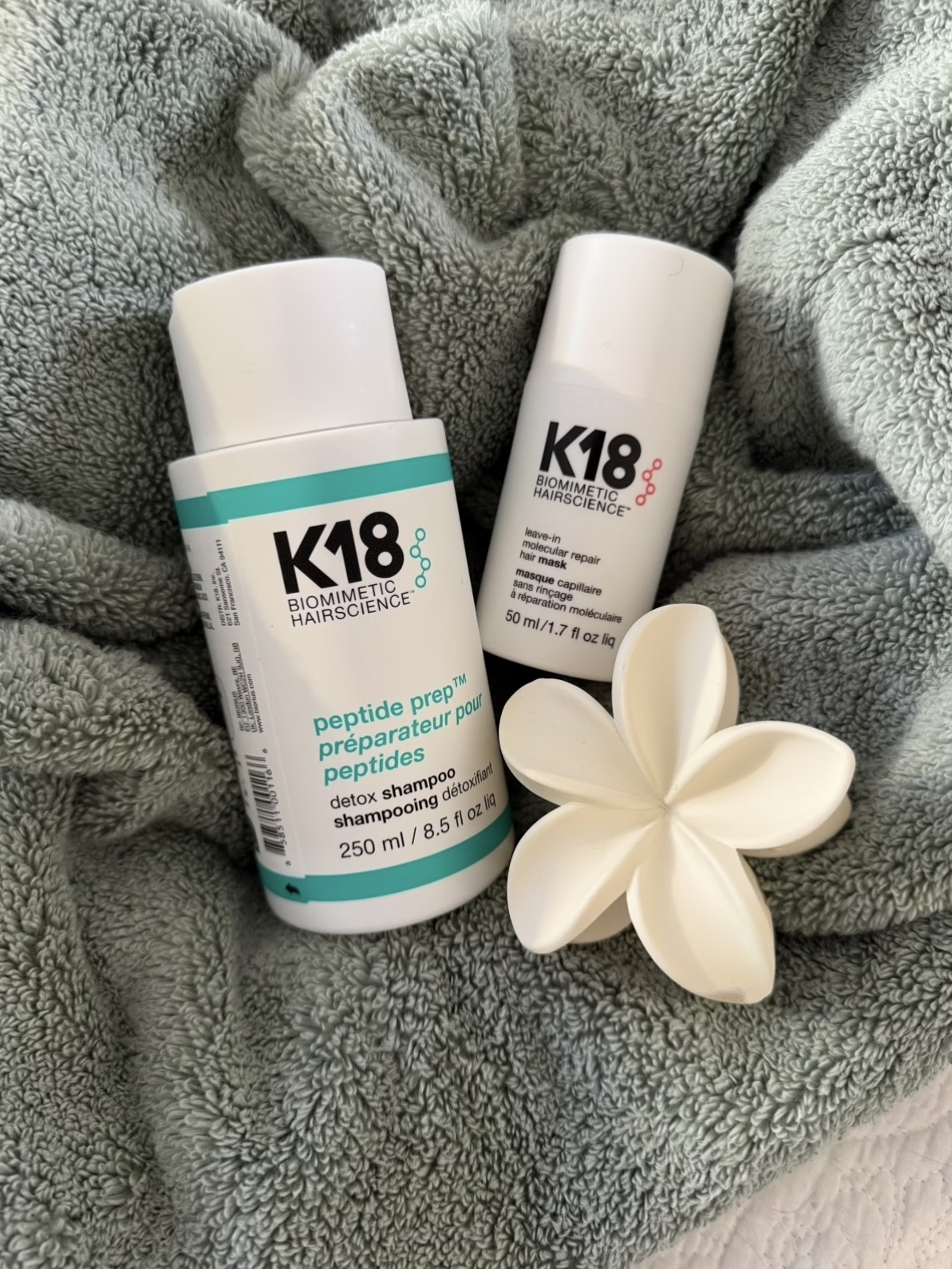
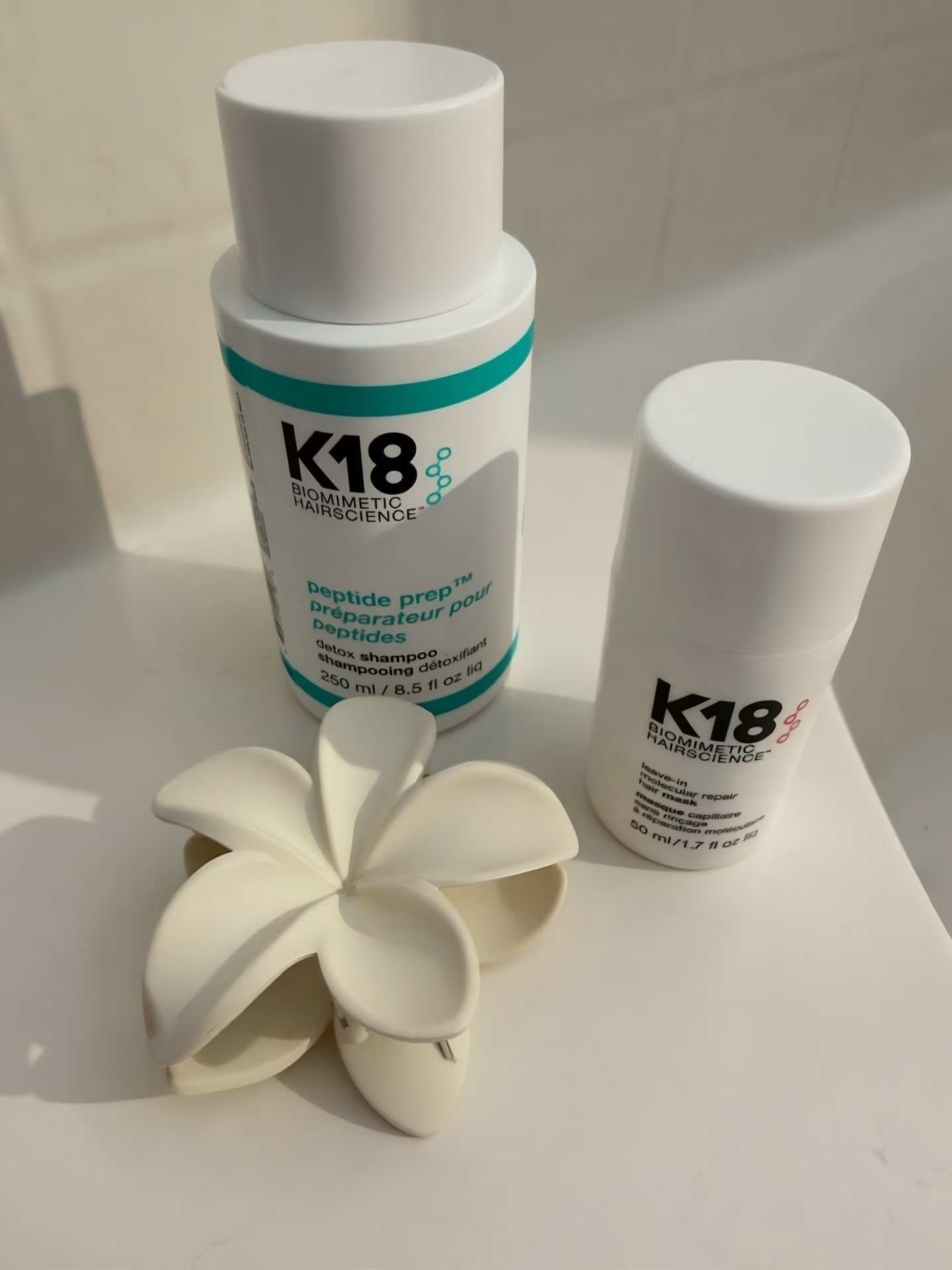
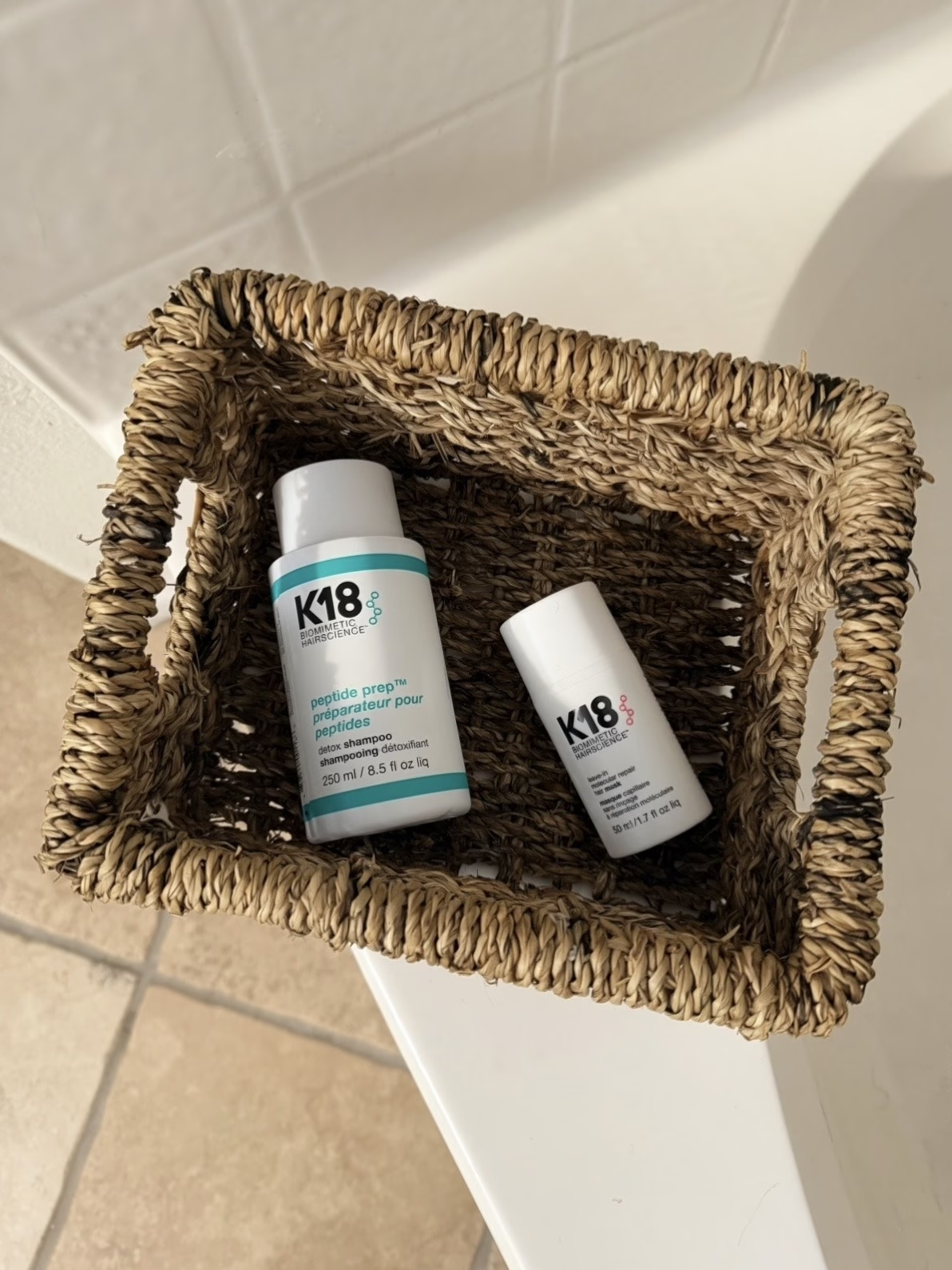
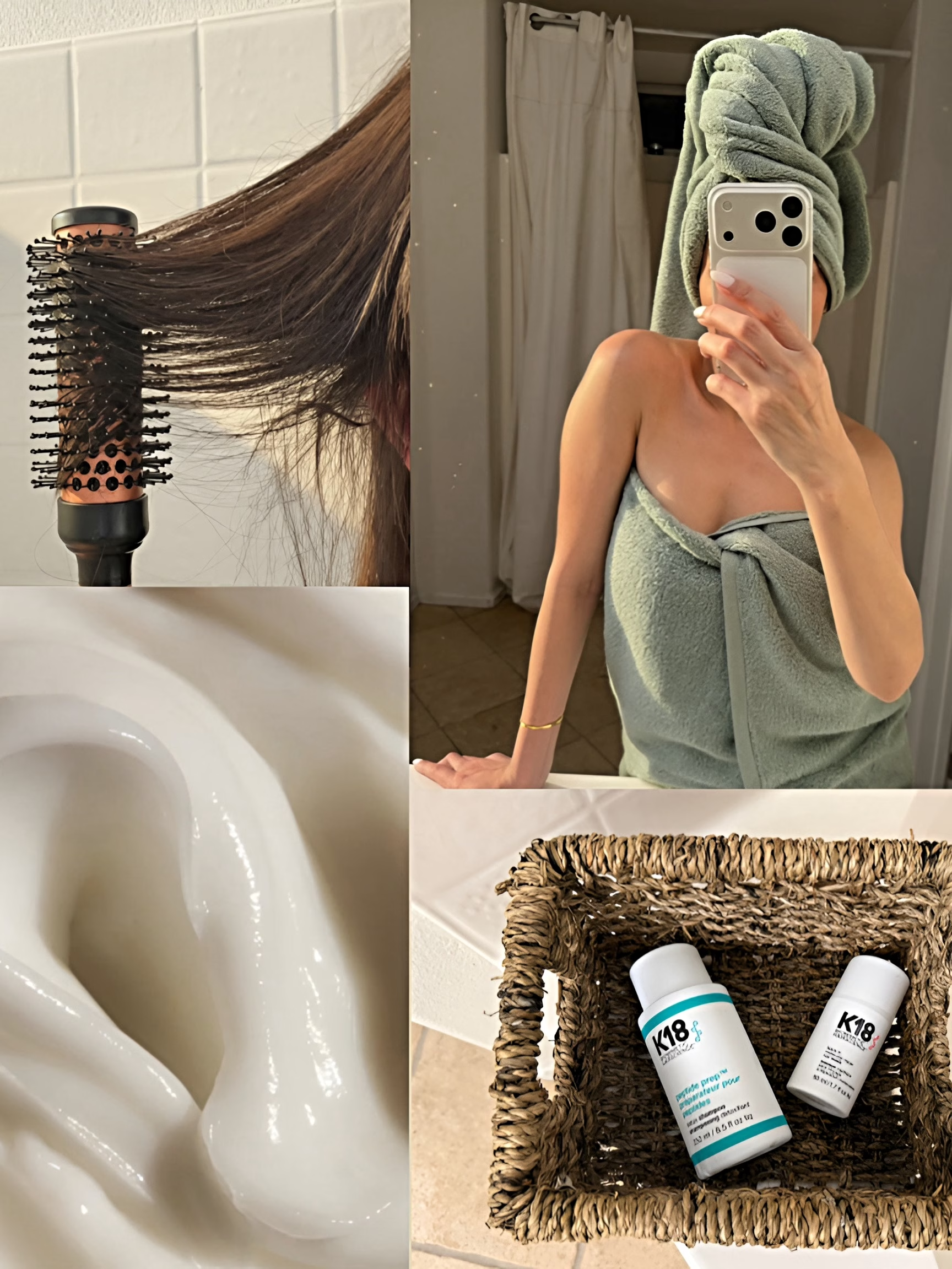
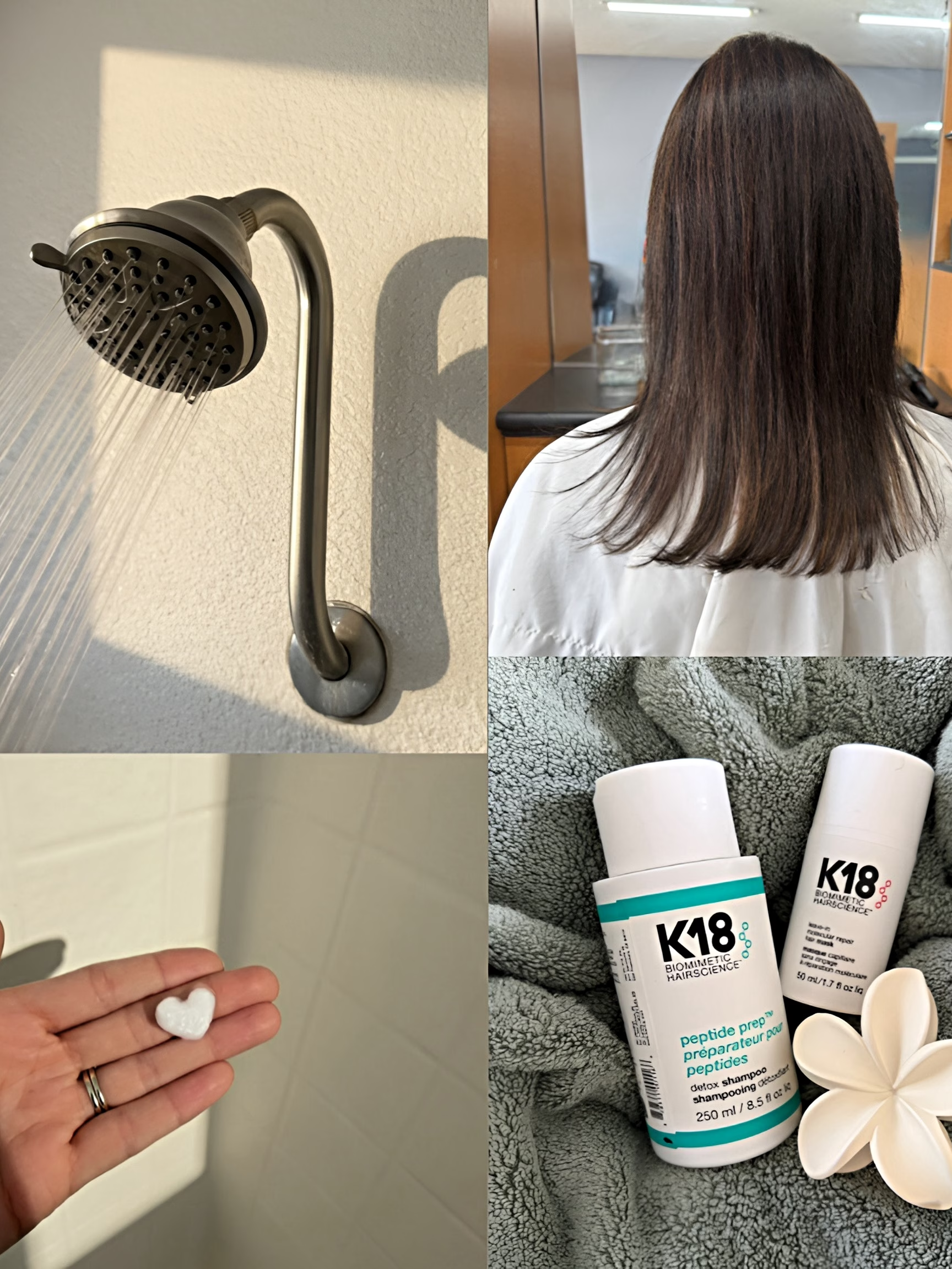
For this review, I’m focusing on the 2 specific repair products from K18’s range: the Peptide Prep Detox Shampoo and the Leave-In Molecular Repair Hair Mask—both tested over one month on my badly damaged, double-processed hair.
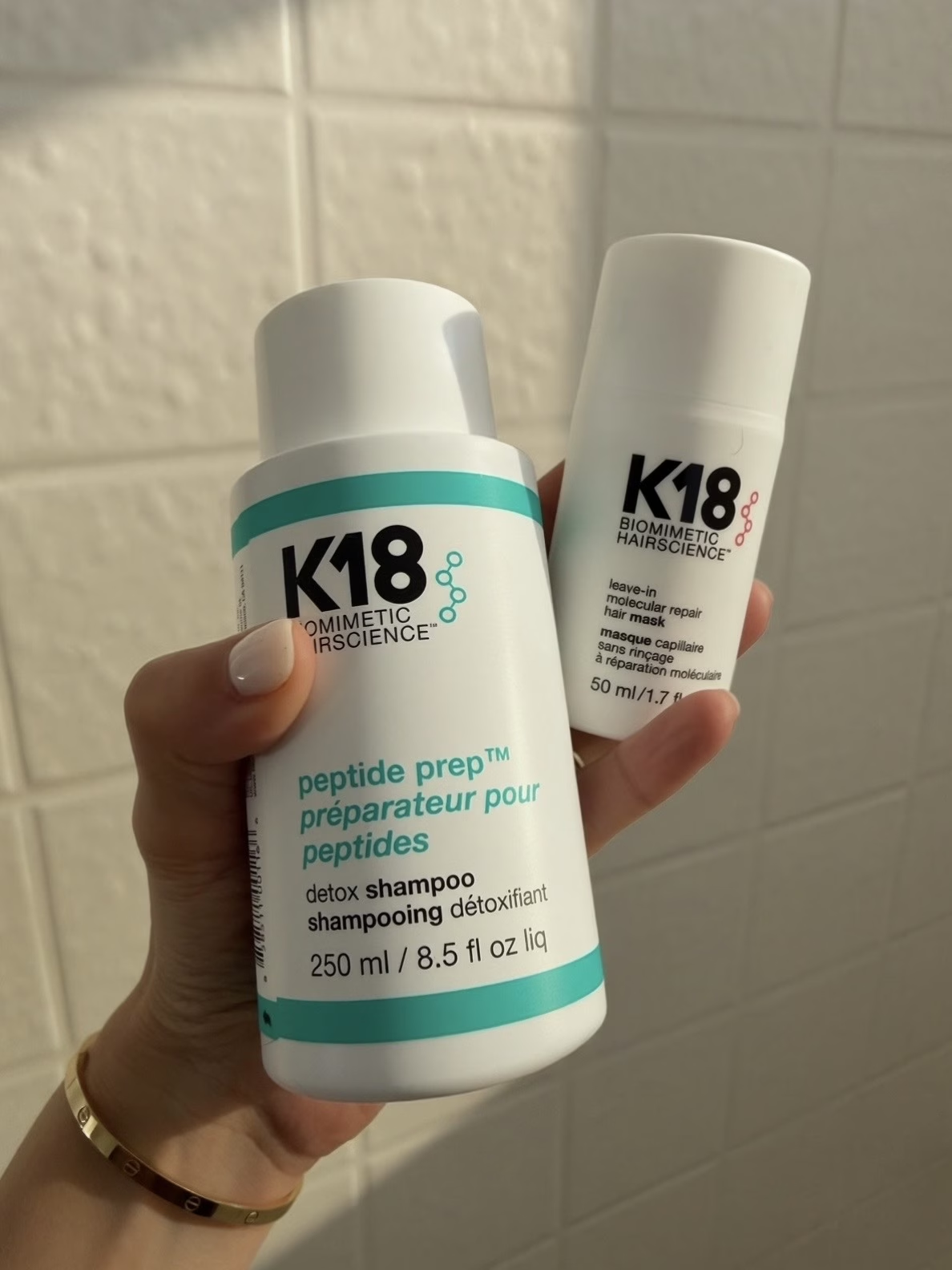
K18 Peptide Prep Detox Shampoo: How I Use It & What I Really Think
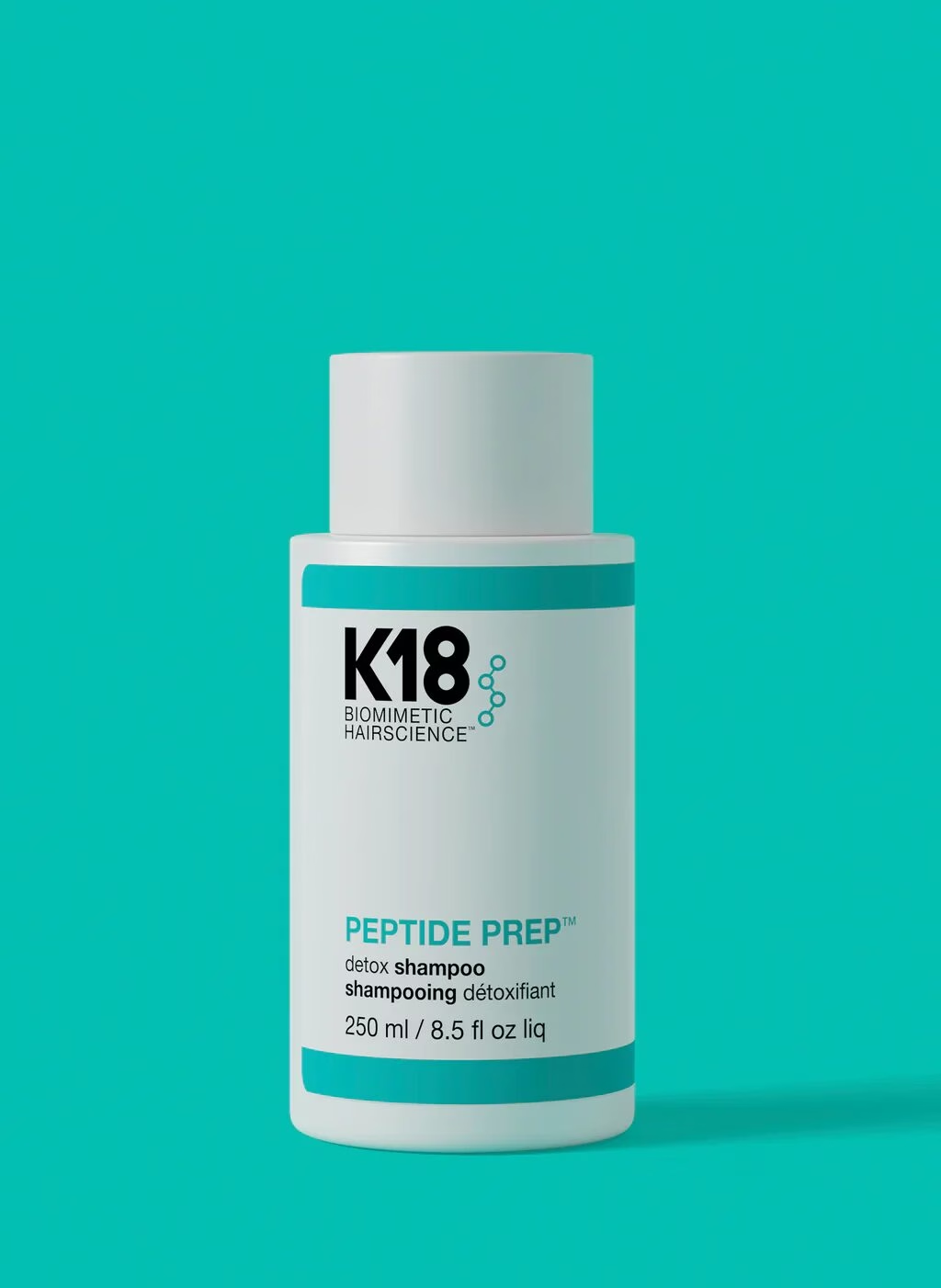
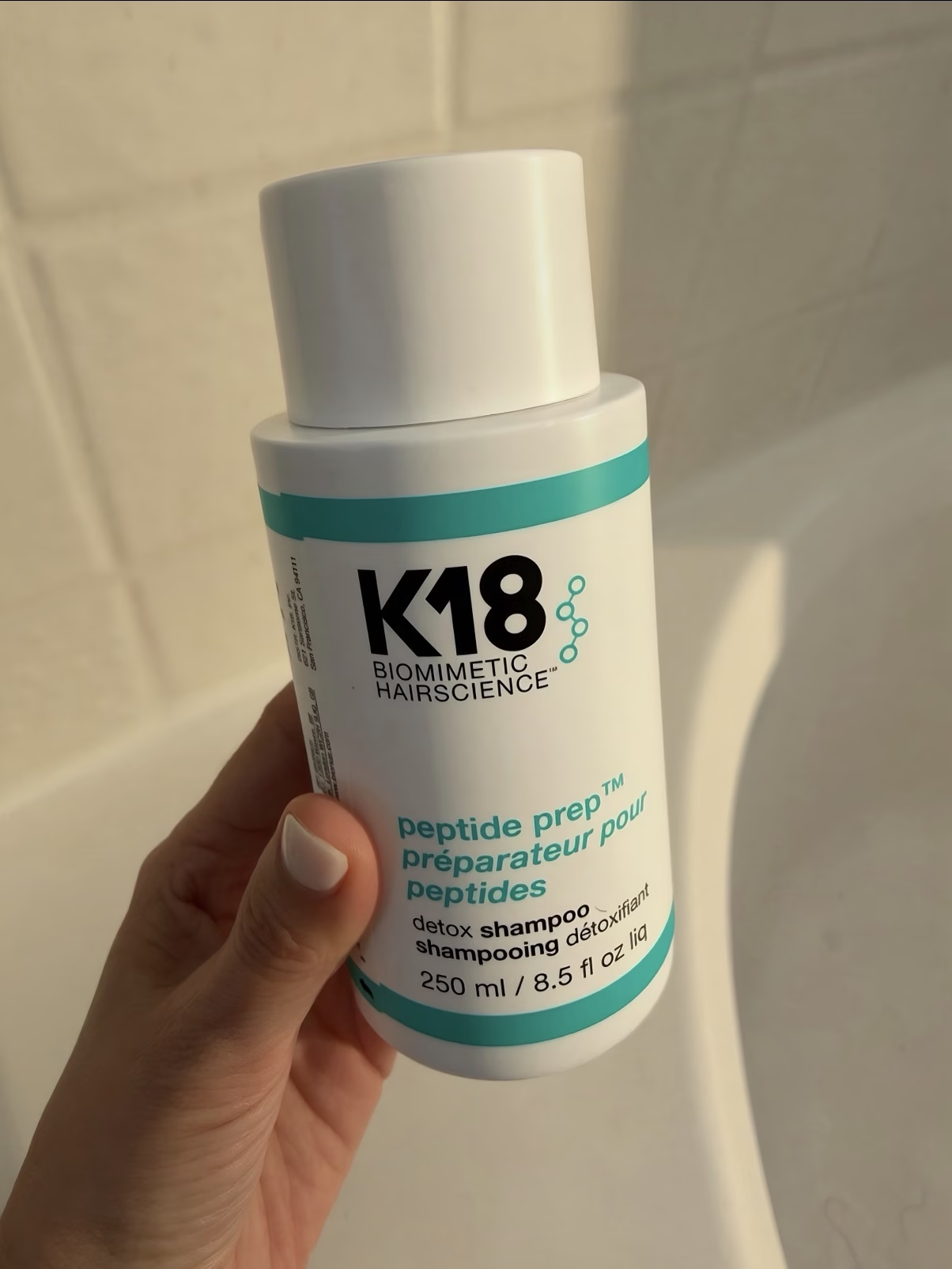
The Peptide Prep Detox Shampoo is a non stripping clarifying shampoo from K18’s prep range, designed to remove product buildup without stripping color or moisture.
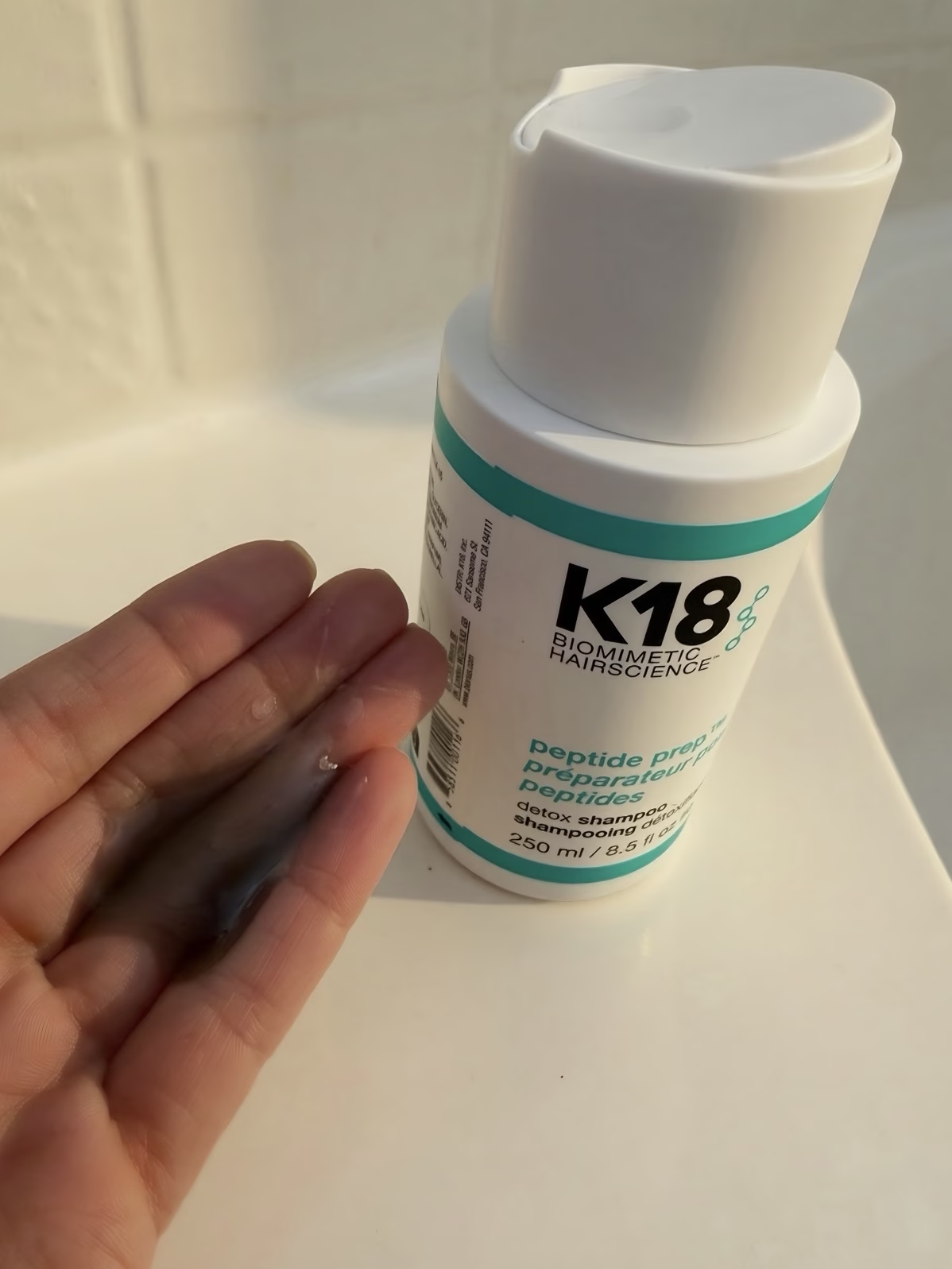
Texture and feel: It’s a clear gel formula with a mild lather. The scent is salon-like—clean and fresh without being overwhelming. Think professional rather than fruity or perfume-heavy.
Here’s exactly how I use it on my damaged hair:
| Step | What I Do |
|---|---|
| 1 | Wet hair thoroughly with warm (not hot) water |
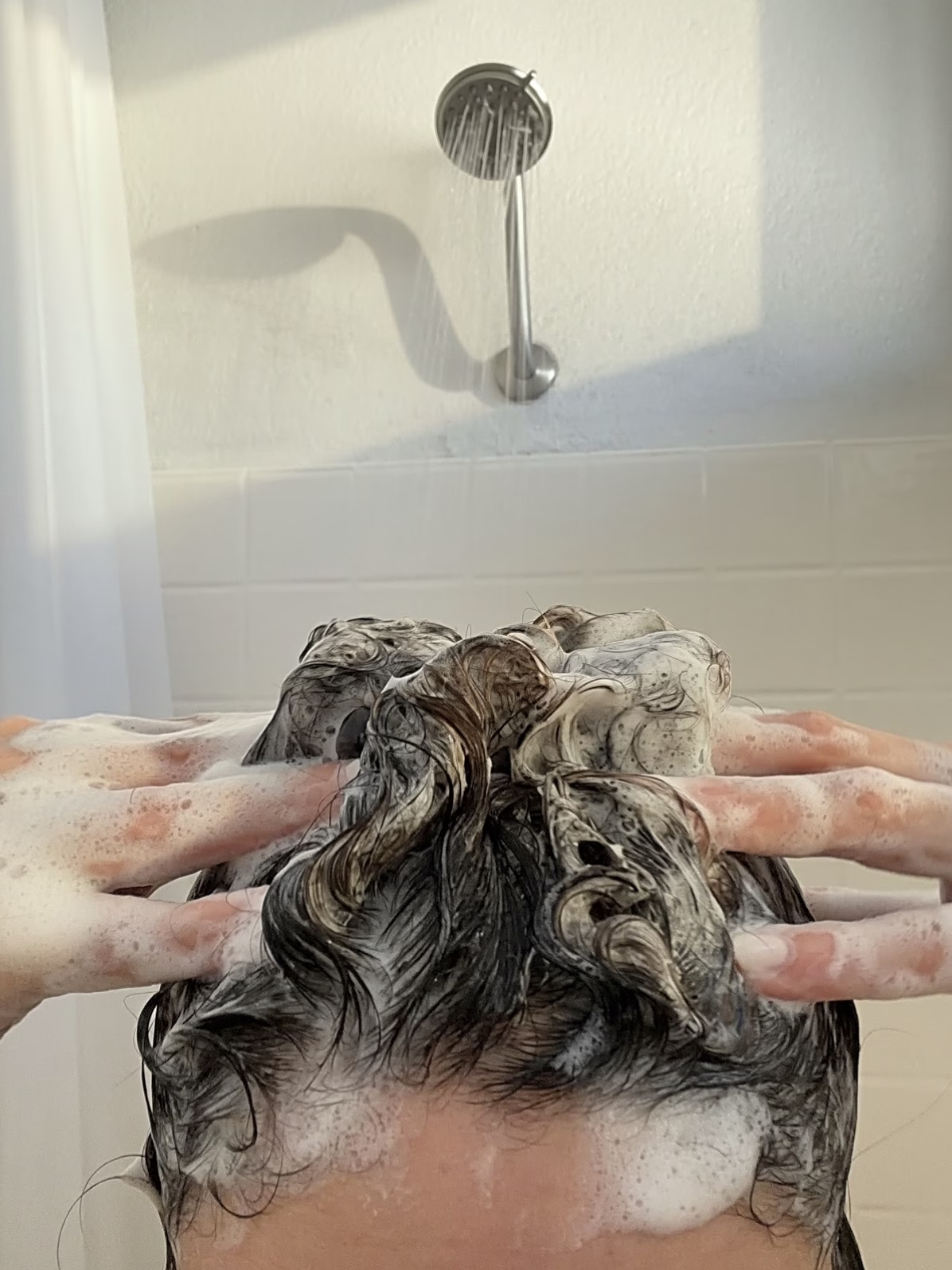
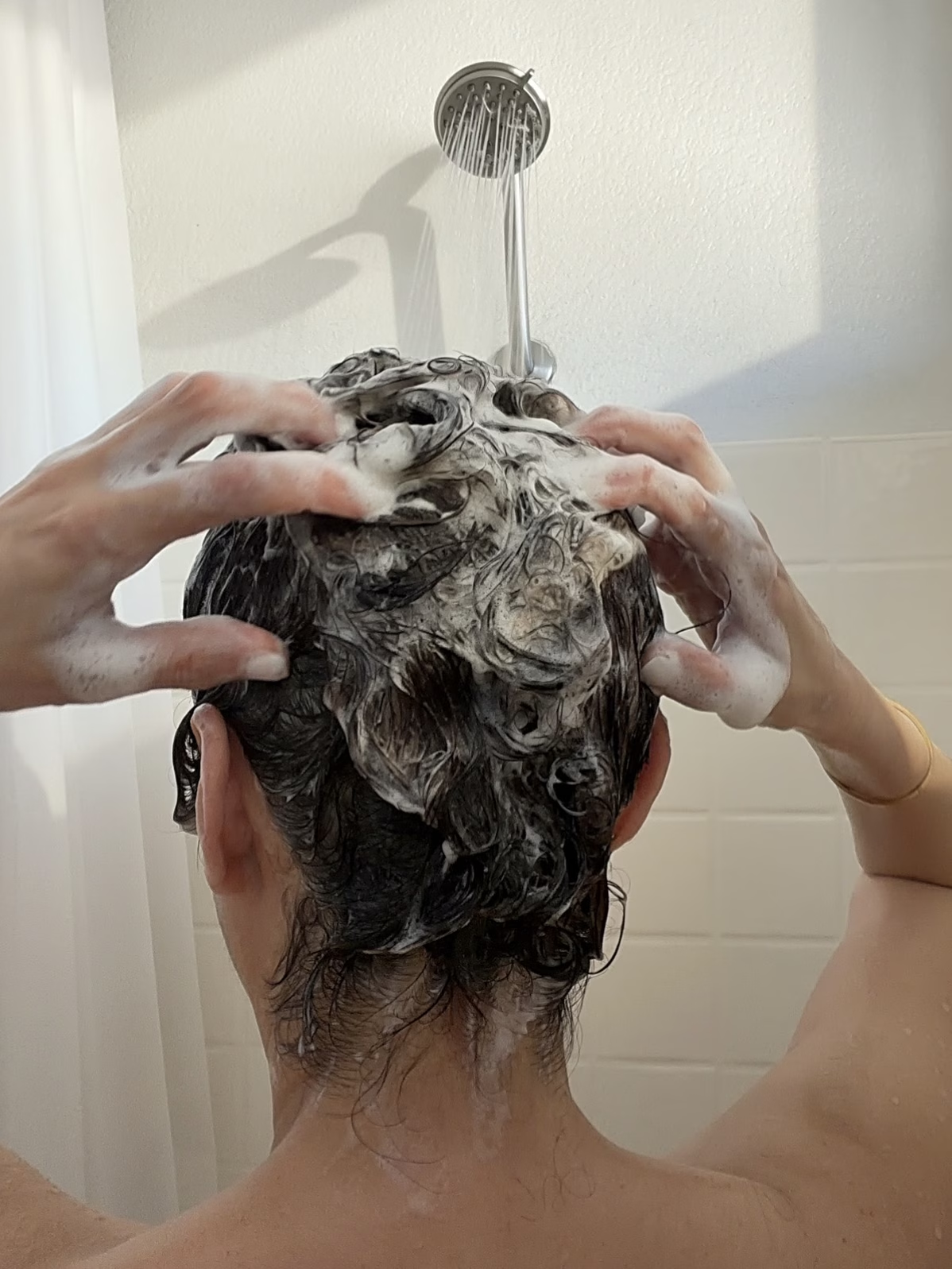
| 2 | Apply a small amount to roots and scalp |
| 3 | Massage with fingertips in circular motions |
| 4 | Gently pull lather through mid-lengths and ends—no aggressive scrubbing |
| 5 | Rinse thoroughly |
| 6 | Skip conditioner before the K18 mask |
I use this detox shampoo once a week before my K18 mask application. My scalp feels very clean without that tight, stripped feeling you get from harsh clarifying shampoos. The clarified hair that results helps the mask penetrate more effectively.
The biggest difference I noticed: less waxy product buildup around my roots from dry shampoo and styling products. My hair isn’t squeaky or rough afterward—just genuinely clean.
This shampoo is microdosed with K18PEPTIDE, which helps reduce protein loss during cleansing. But the main goal here is detoxing and prepping, not doing the full repair job. It’s a support player, not the star.
Honest downsides:
- The price point is significantly higher than regular clarifying shampoos
- If you wash daily or have very fine, undamaged hair, this might be more “nice to have” than essential
- The exact amount you need vary depending on hair length and density
Who I’d recommend it to: People with heavy product use, hard water buildup, or those prepping for the K18 mask on colored or bleached hair.
Who might skip it: Minimal product users with healthy hair who don’t need intensive prep.
K18 Leave-In Molecular Repair Hair Mask: The Star of My Routine
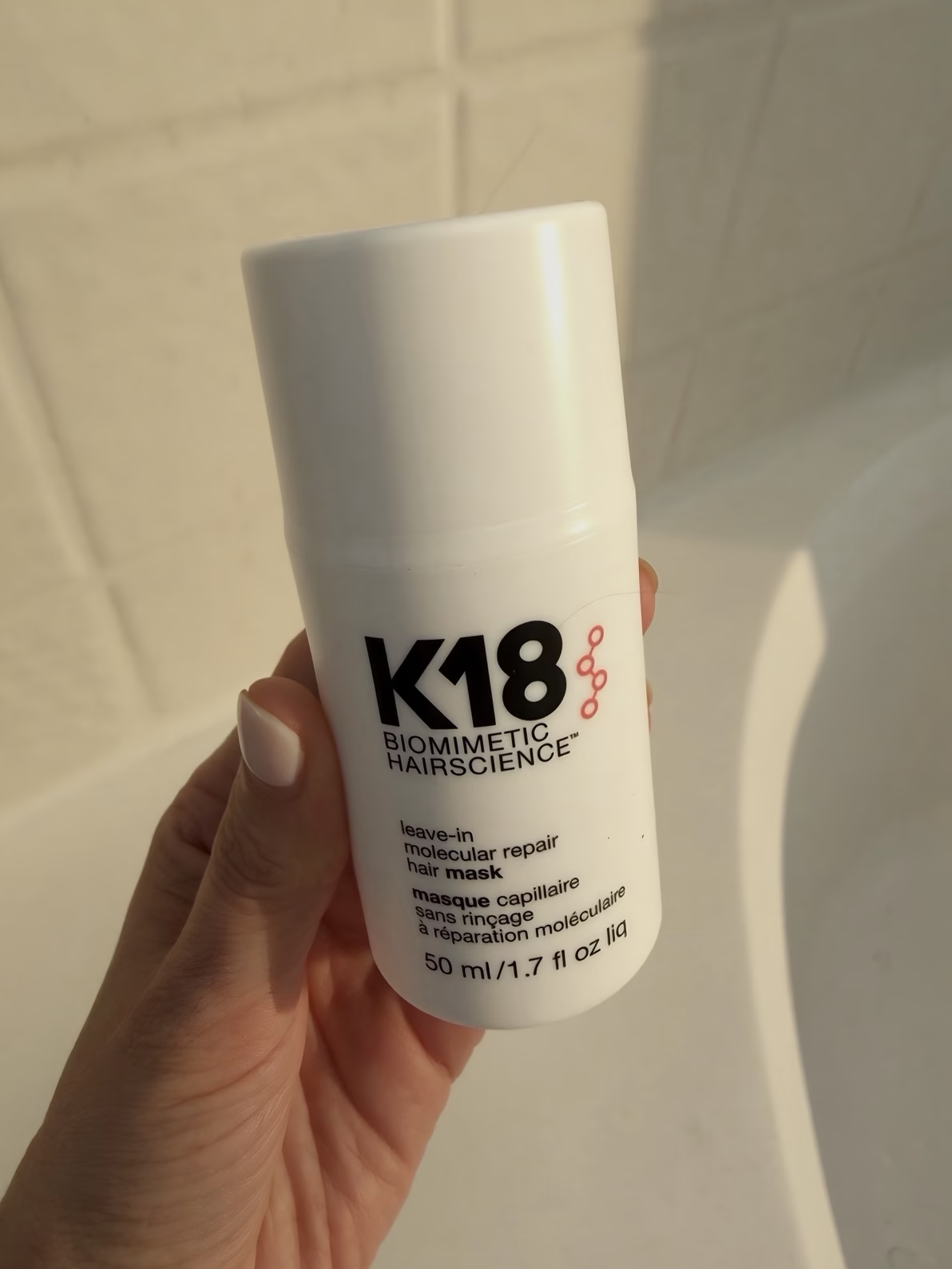
This is K18’s hero product—the original launch that put the brand on the map before all the other SKUs followed. If you’ve heard of K18, you’ve probably heard of this hair mask.
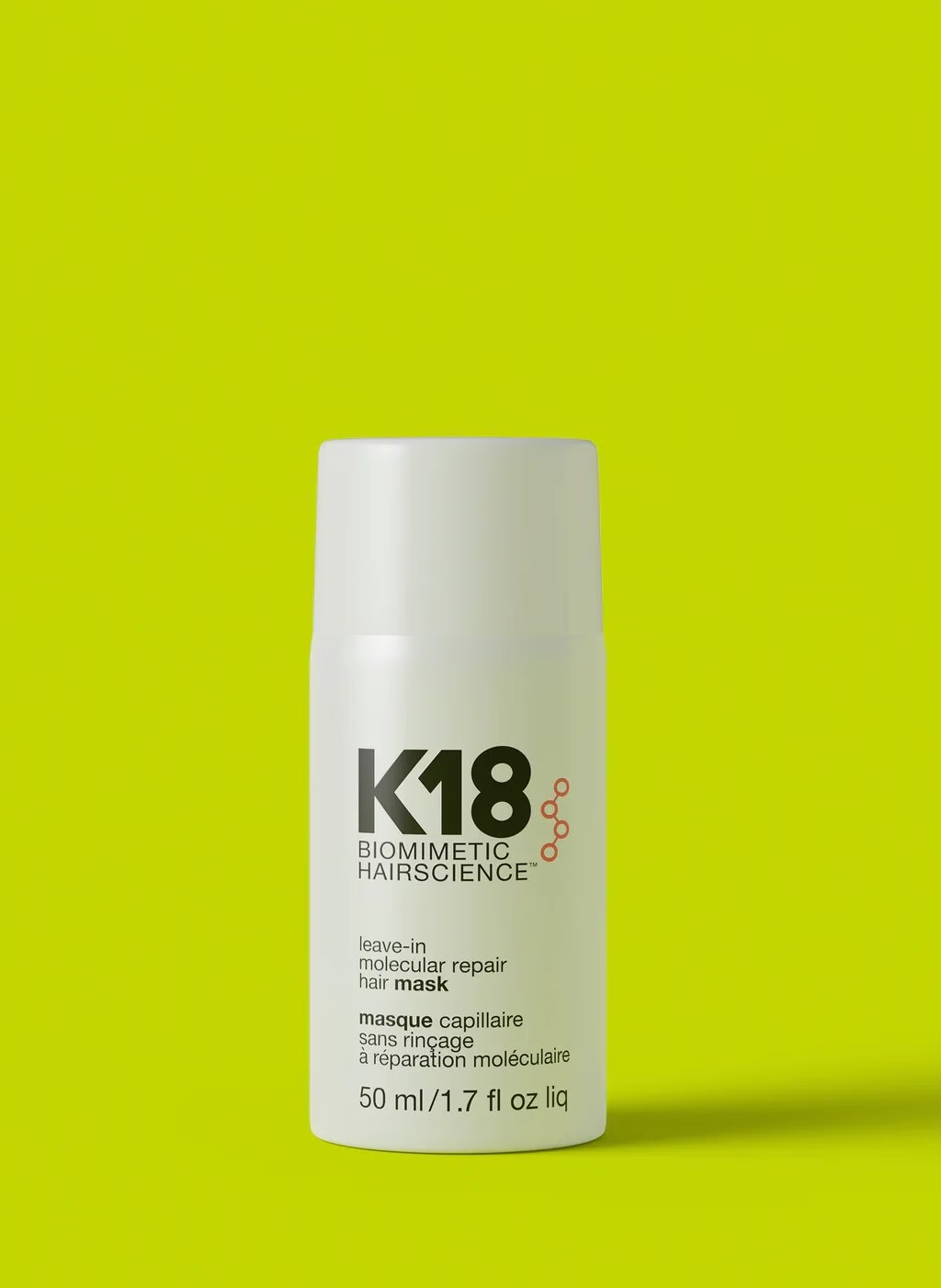
The formula is a concentrated cream used sparingly as a leave in treatment. You don’t rinse it out. And on K18 days, it intentionally replaces your conditioner.
The science in friendly terms: the molecular repair technology uses K18PEPTIDE to reconnect broken polypeptide chains in about 4 minutes. This helps restore the internal structure of the hair shaft, making hair stronger from inside rather than just temporarily smoother on the outside. It targets the polypeptide chains and keratin chains that get damaged during chemical damage and heat damage from styling.
My Experience
My experience: After my corrective highlighting session, my stylist applied the K18 mask at the bowl. Then I continued at home 2-3 times per week over the following month.
The immediate results I noticed:
- Less snapping during detangling
- Hair feel significantly less “mushy” when wet
- Improved elasticity—my hair bounced back instead of stretching and breaking
- Ends not fraying as badly after blow-drying
- Fewer split ends forming on existing damaged sections
I need to be candid about the realistic side: the leave in molecular repair mask does not magically erase every split end or make hair feel like virgin hair overnight. My more damaged the hair sections still need regular trims. But it significantly improved manageability and reduced less breakage on my over-processed strands.
Compared to traditional repair masks and bond builders, K18 is lighter, faster (just 4 minutes), and leaves hair less coated. For my fine textured strands, this is exactly what I prefer. Heavy masks make my damaged hair feel weighed down, but K18 gives me bouncy hair without the residue.
My verdict: If I had to choose just one K18 product for my hair types, it would be the Leave-In Molecular Repair Hair Mask. This is the k18 leave in molecular that actually delivers on reverse damage claims.
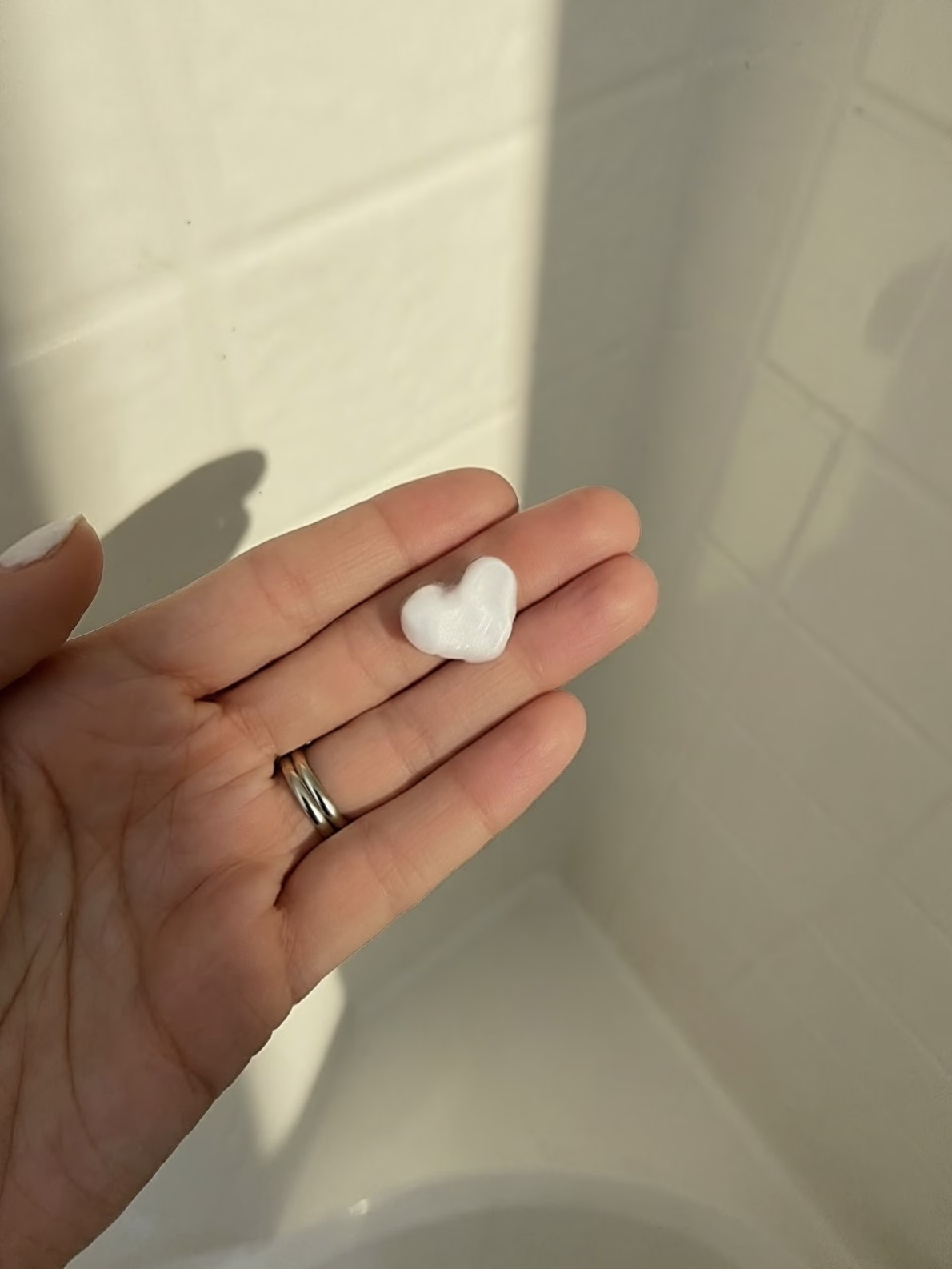
How I Actually Use K18 Step-by-Step (My Routine After Color Correction)
Following the correct application protocol made a noticeable difference in my results. Here’s my exact wash-day sequence for very damaged, color-corrected hair:
My Full Routine
Step 1: Shampoo
- Twice a week: K18 Peptide Prep Detox Shampoo
- Other wash days: A gentle, hydrating shampoo (nothing with heavy silicones)
Step 2: Skip conditioner
- Skip conditioner completely when I plan to use the K18 mask
- This is non-negotiable for the treatment to work
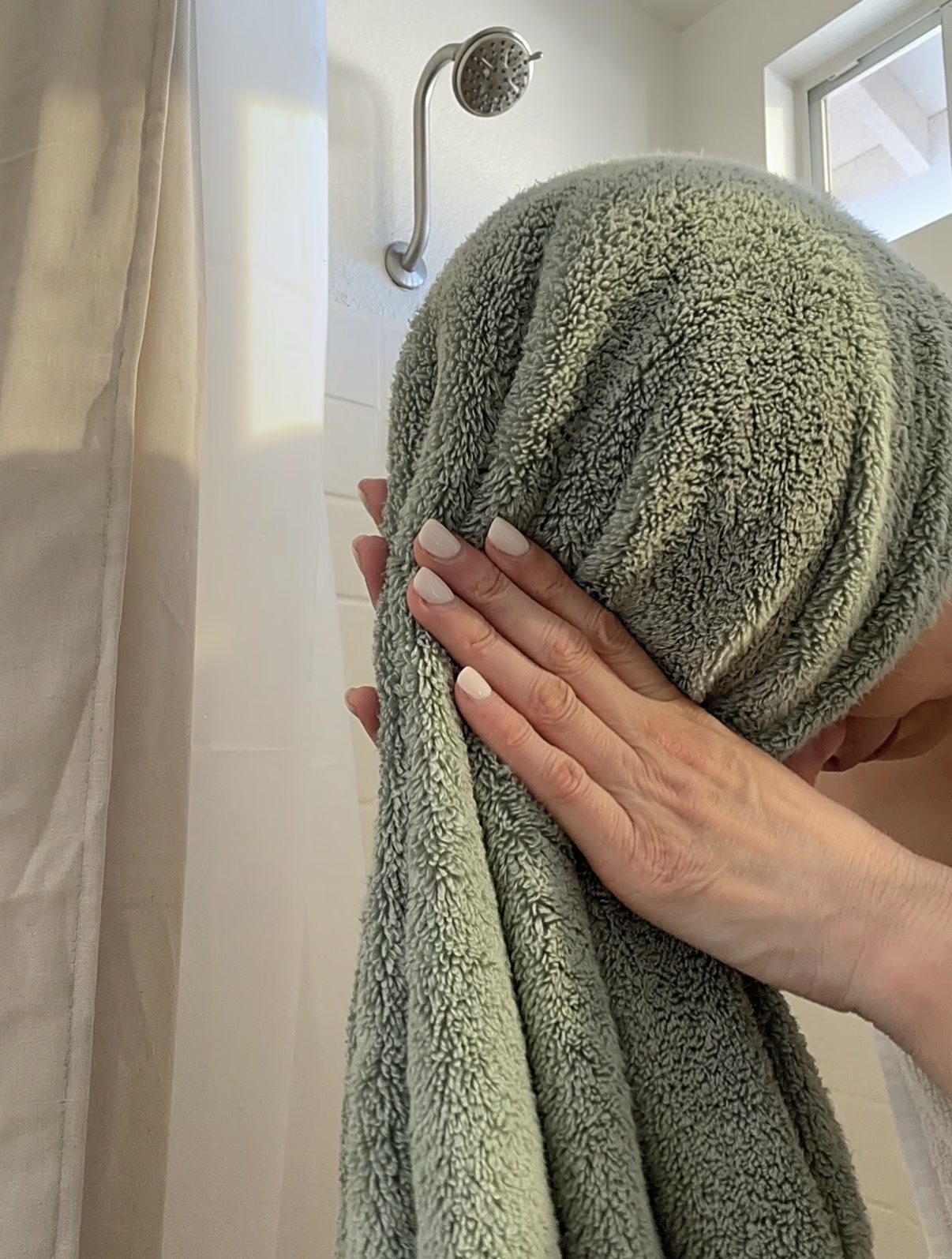
Step 3: Towel dry
- Gently towel dry until hair is damp or dry hair—not dripping wet
- Damp hair is the ideal state for application
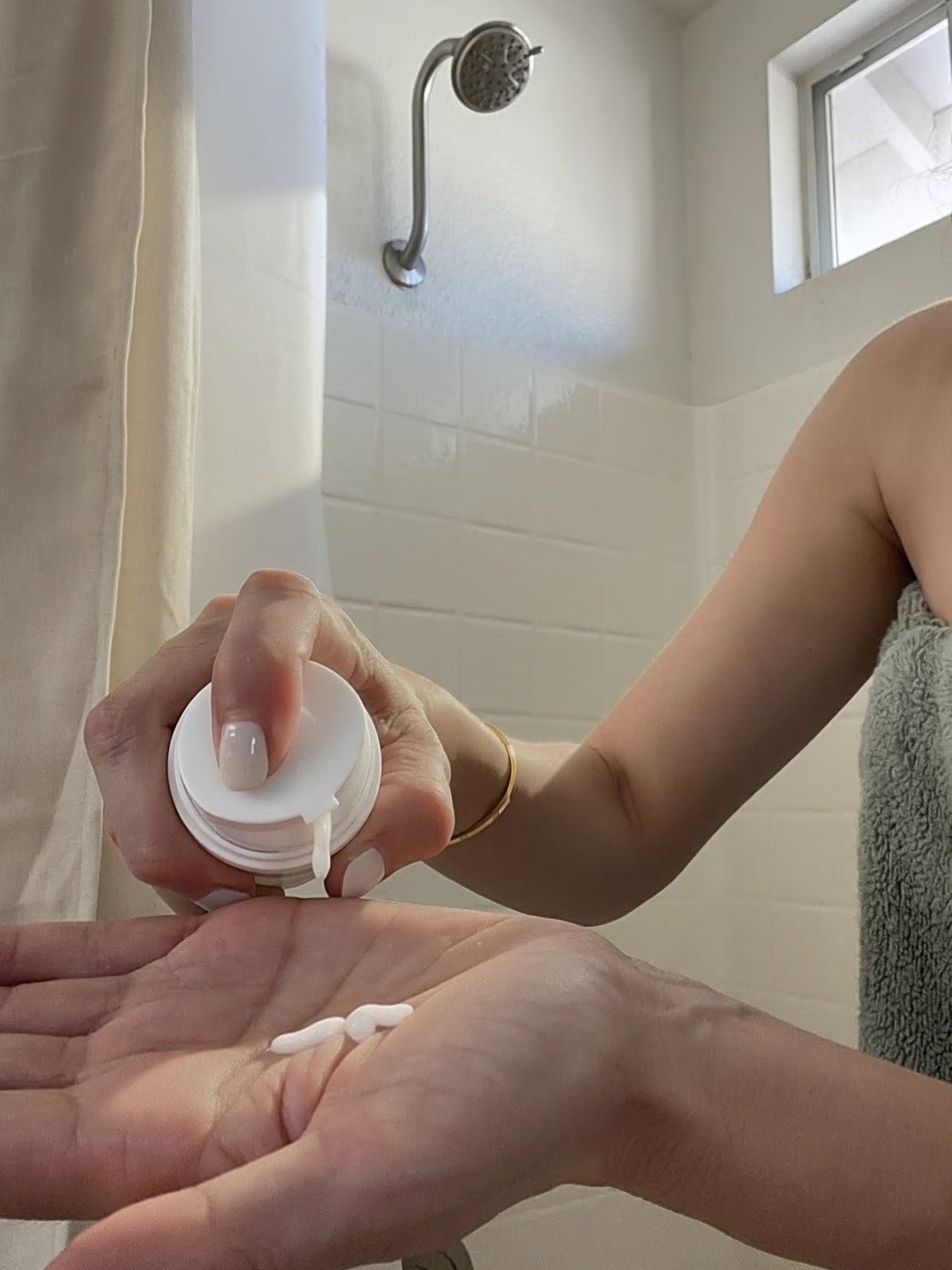
Step 4: Apply the K18 Leave-In Molecular Repair Hair Mask
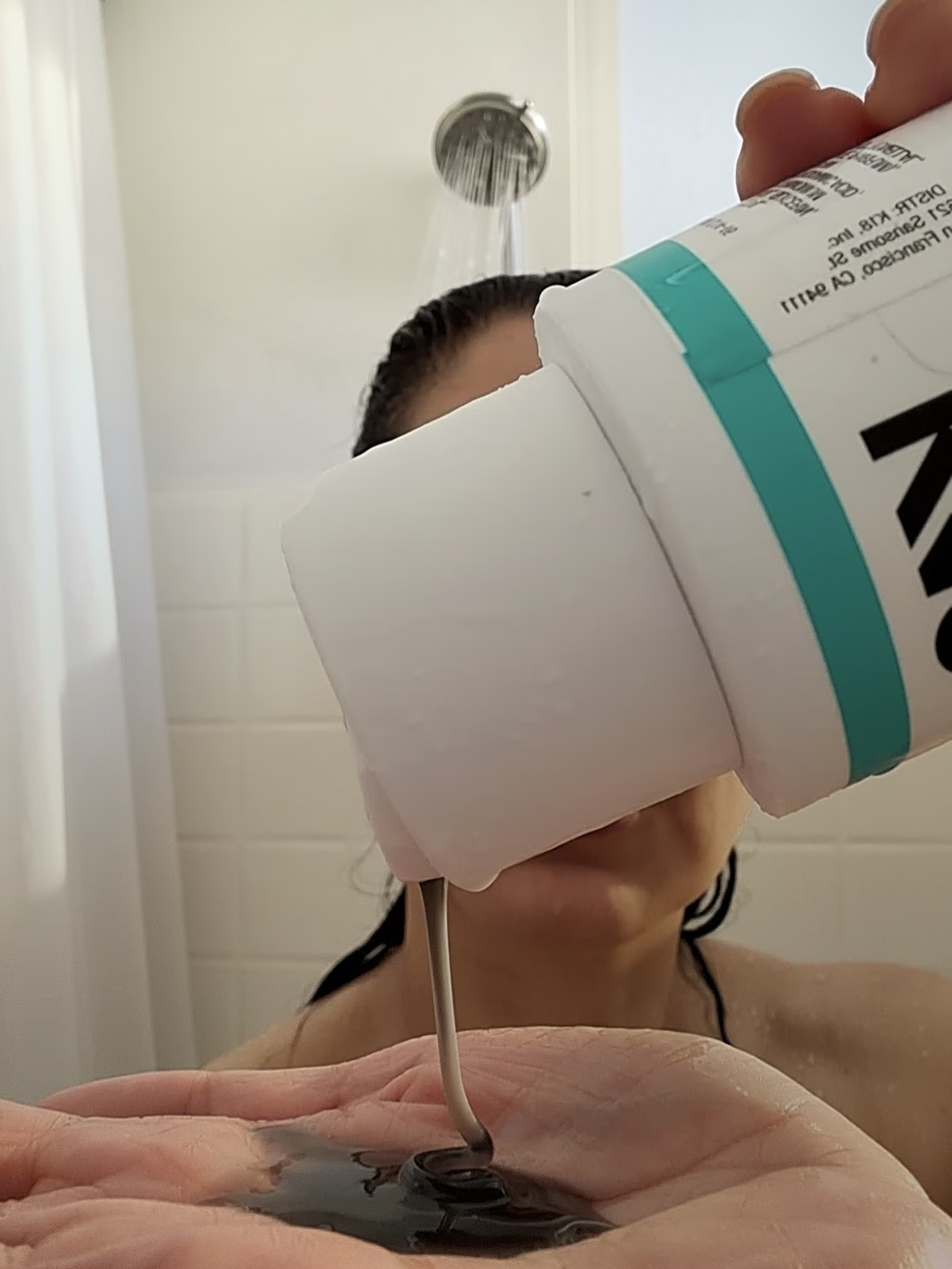
Here’s my detailed mask application:
| Hair Type | Amount |
|---|---|
| Short or fine hair | One pump |
| Medium length or density | 2 pumps |
| Long hair or thick/dense | 3 pumps |
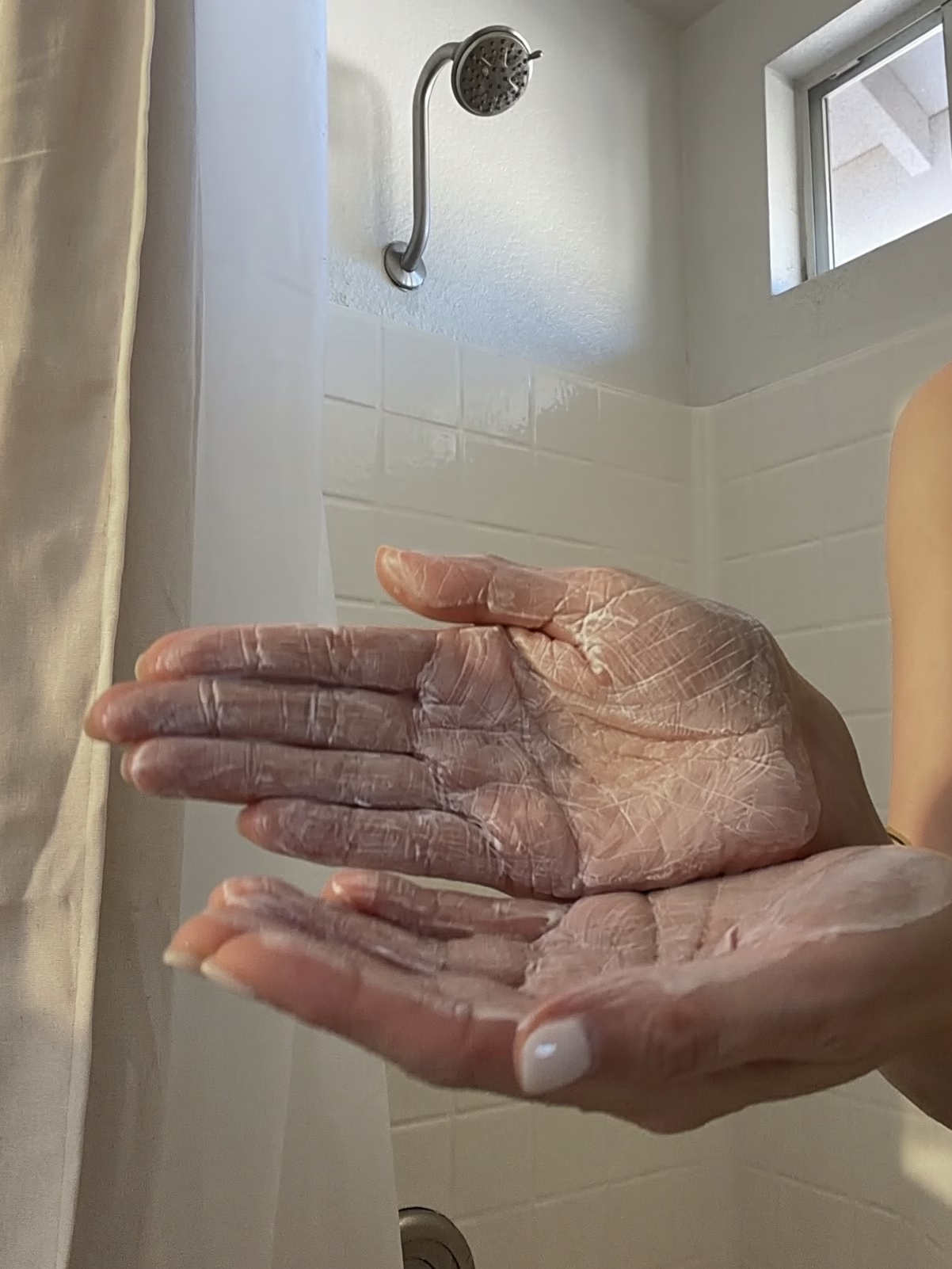
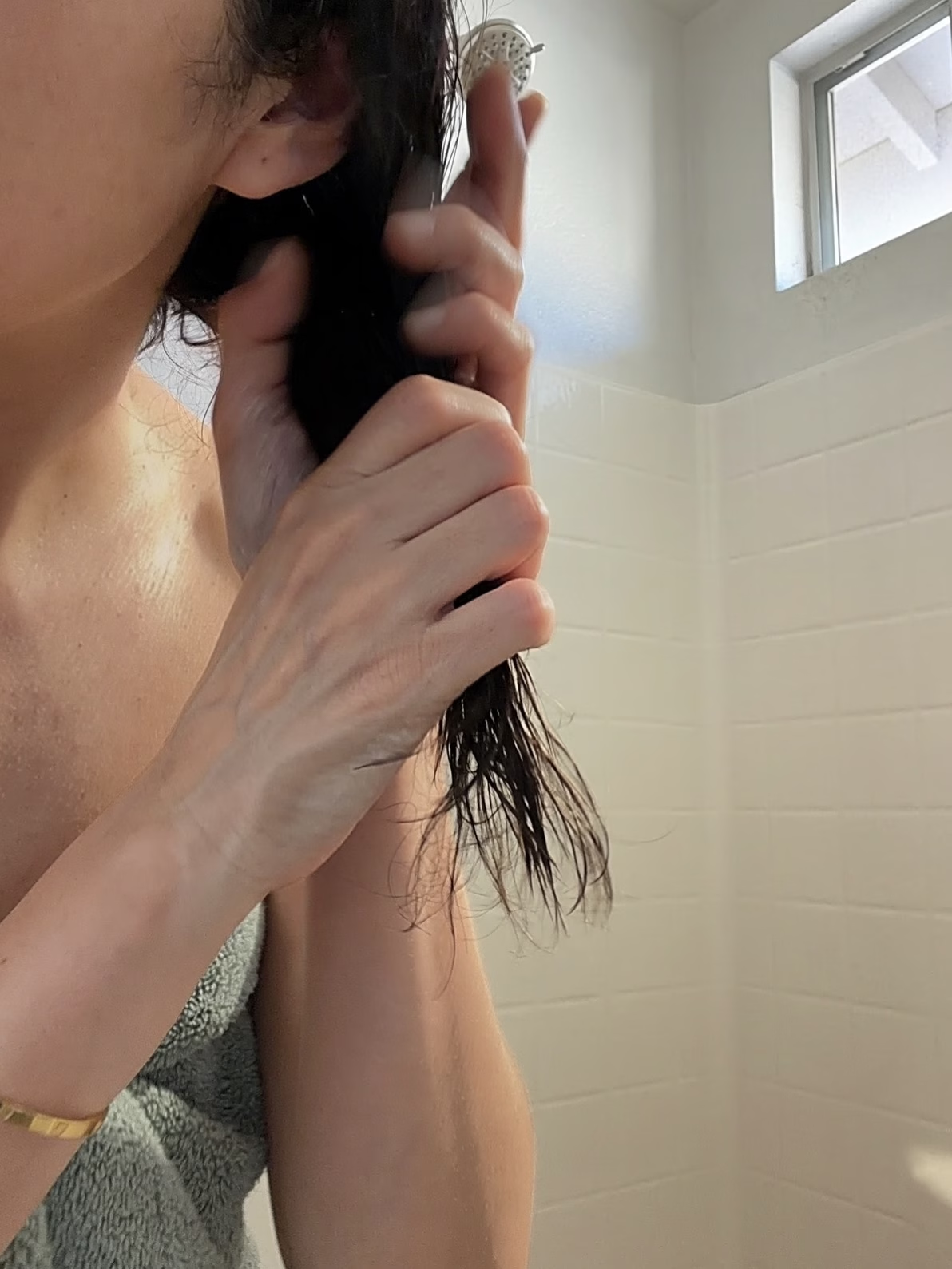
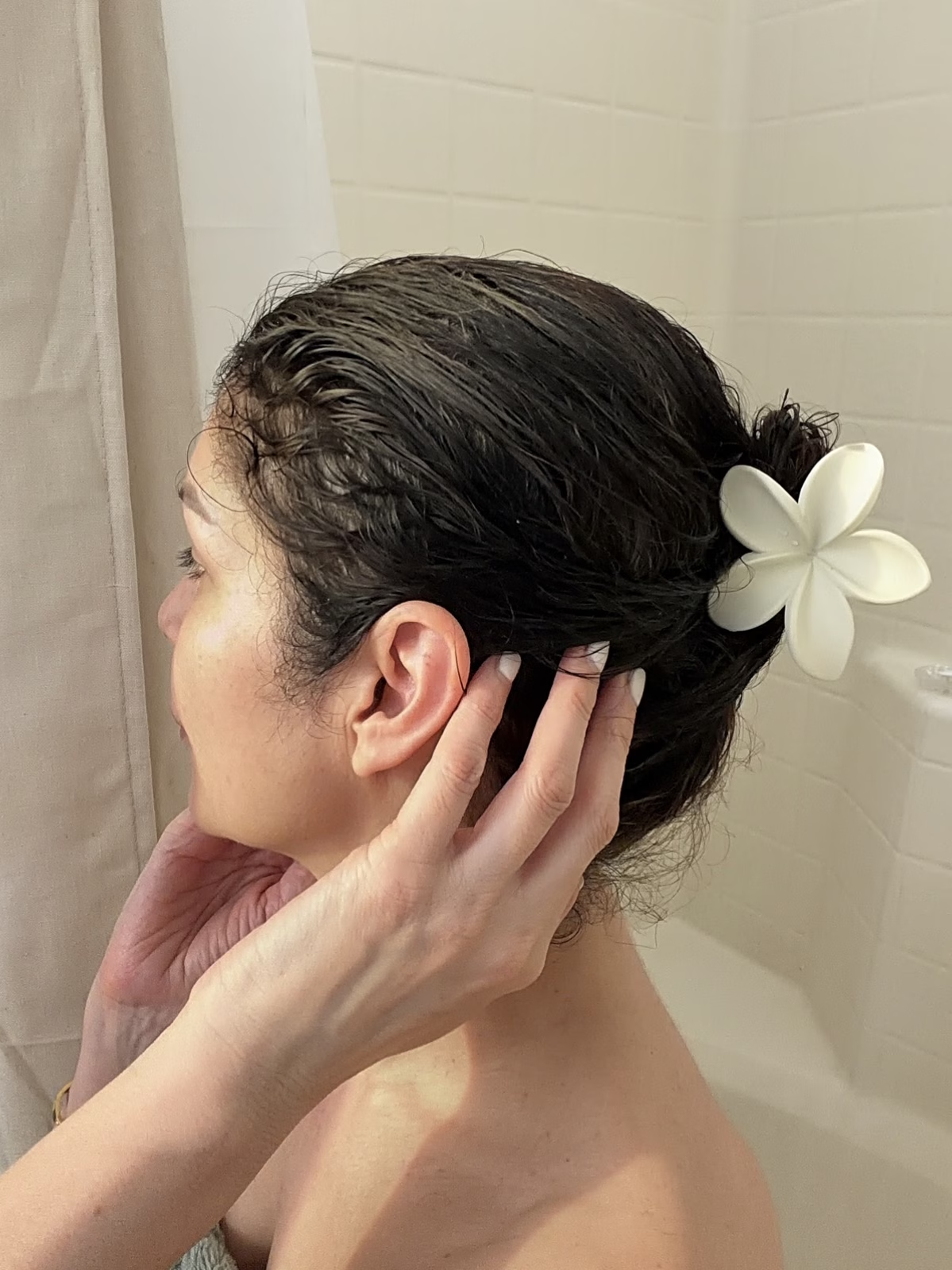
I emulsify the product in my hands first, then apply from mid-lengths to ends. Whatever’s left goes closer to the roots. I comb through with a wide-tooth comb for even distribution.
The Critical 4-Minute Wait
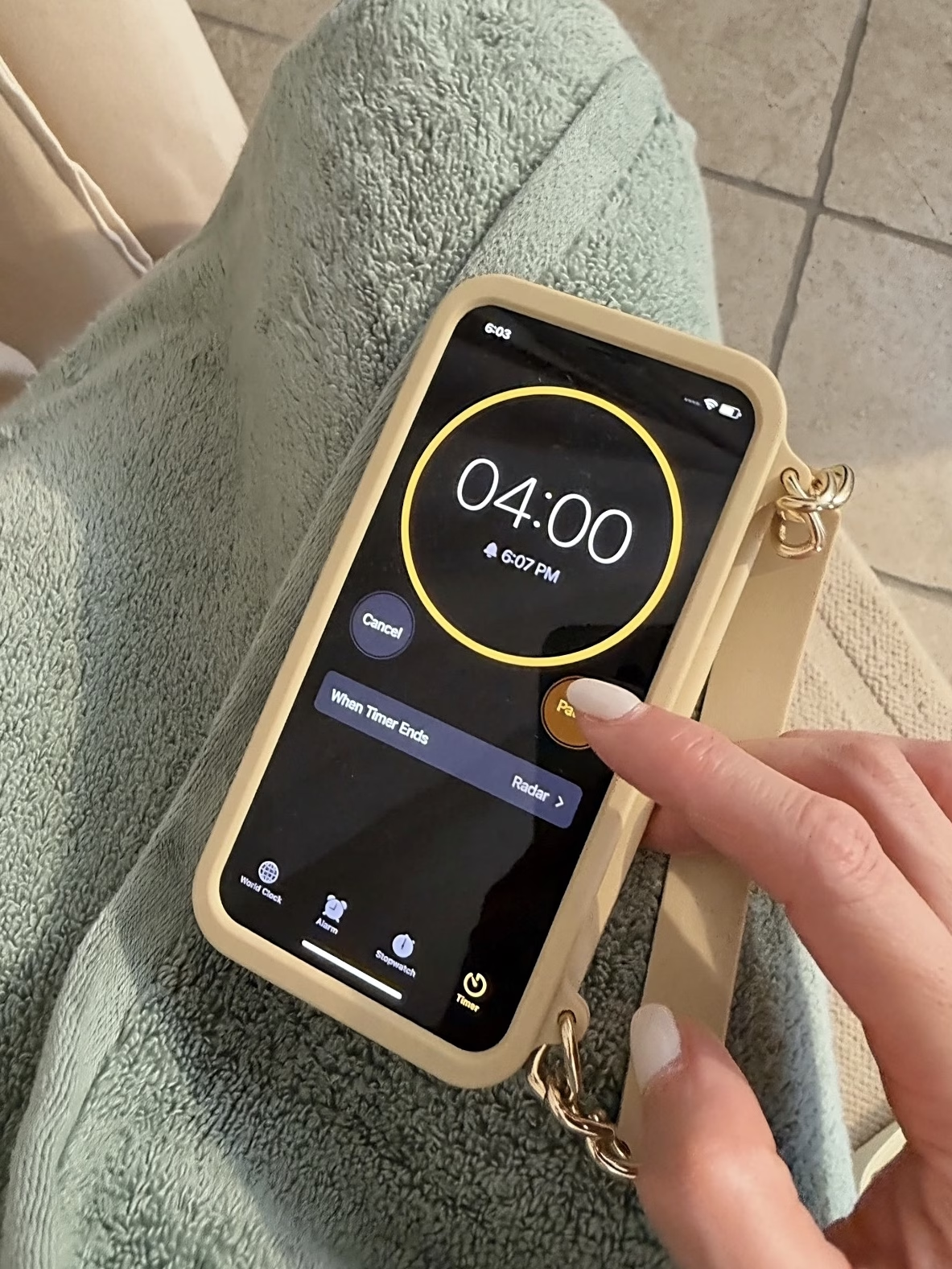
You must leave the mask untouched for at least 4 minutes. This is when the K18PEPTIDE is penetrating effectively into the hair cuticle and working on those broken bonds.
During this time, I:
- Do not add any other hair products
- Do not rinse
- Do not towel or touch my hair
- Let the peptide work uninterrupted
- Usually, I use a clip to keep my hair in place and let the peptide work
After 4 Minutes
On my damaged hair, I follow with:
- A lightweight leave-in conditioner (hydrating, non-protein-heavy) for extra slip
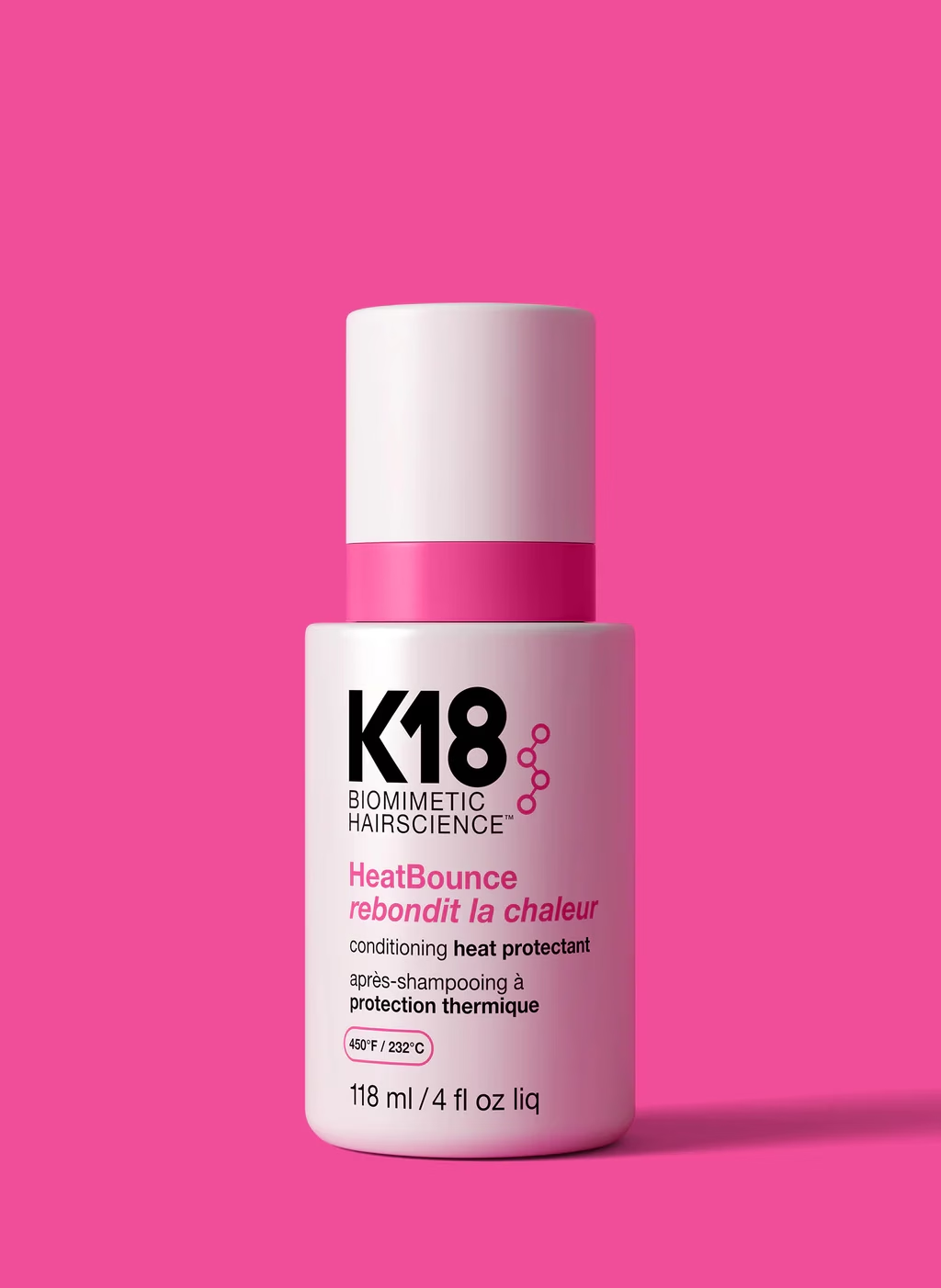
- A conditioning heat protectant before blow-drying, I am using the K18 Heat Protectant
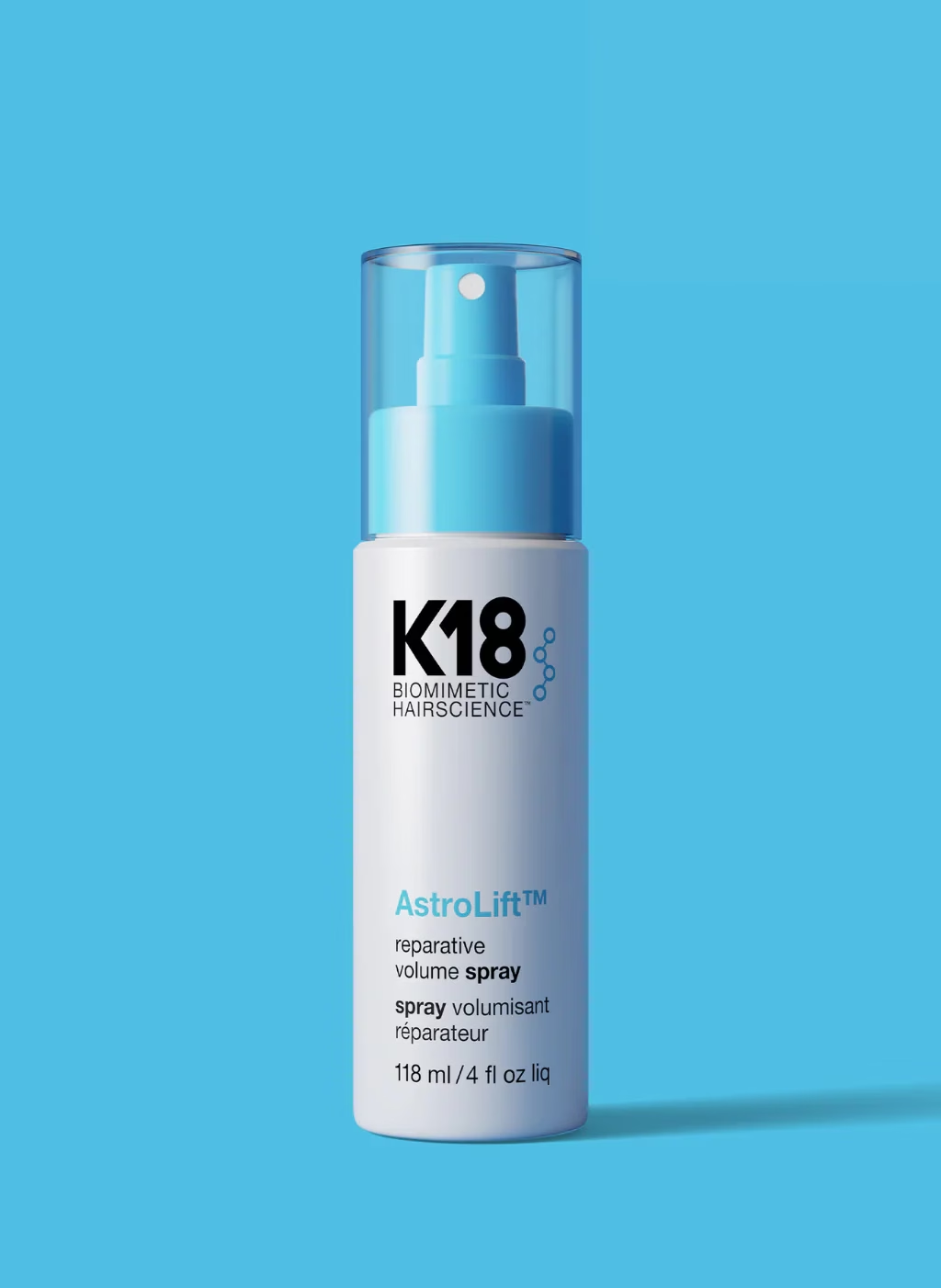
- If I want to add volume to my hair, then I apply K18 AstroLift Reparative Volume Spray
I sometimes air-dry with a diffuser, and I notice bouncy results either way. The heat protection is essential when I do use tools.
Frequency
- First 4-6 washes after my March 2026 color correction: K18 mask every wash
- Current month: About once a week or every other wash for maintenance
- I adjust depending on how my hair health feels
Practical Tips From My Experience
- Don’t overload the product—using it like a regular mask makes it feel heavy
- Avoid using rich hair oils before the 4 minutes are up
- Be patient with breakage reduction; it builds over several weeks
- Using the best dry shampoo between washes helps maintain results
This routine, done consistently for one month, is what started to turn my bleach-damaged, over-processed hair around. The lasting results come from consistency, not one-time use.
Peptide Prep Detox Shampoo vs. Leave-In Molecular Repair Hair Mask: Which Is Worth It?
If you’re wondering which K18 product to buy first—especially if you don’t want to purchase the entire line at once—this comparison is for you.
Role Breakdown
| Product | Primary Function |
|---|---|
| Peptide Prep Detox Shampoo | Deep cleanse and prep; removes product buildup and excess oil so treatments work better |
| Leave-In Molecular Repair Hair Mask | Actual molecular repair; works directly on keratin chains and reverse hair damage |
What Changed Most With Each
Detox Shampoo gave me:
- Healthier-feeling scalp
- Fluffier roots
- Less waxy buildup from styling products
- Better nourish hair potential for other treatments
Leave-In Mask gave me:
- Reduced hair breakage
- Better elasticity
- Smoother hair cuticle
- More bounce even after heat styling
- Visible improvement in extreme damage areas
My Recommendations Based on Your Situation
If budget allows only one product and you have very damaged hair from bleach or color: Start with the Leave-In Molecular Repair Hair Mask. It does the actual repair damage work.
If your scalp is very oily or coated with product: Add the Peptide Prep Detox Shampoo to prep for any hair treatment (including K18 or others). It contains hydrolyzed wheat protein and hydrolyzed wheat starch that help with protein preservation.
Hair Type Considerations
- Fine, fine to medium, damaged hair (like mine): Benefits from the lightness of the mask and the non-stripping detox
- Very thick, curly, or coily hair: May want to pair the mask with richer conditioners and hair oils after the 4-minute window to maintain moisture
Price and Value Transparency
Both products sit at a premium price point compared to drugstore options. The citric acid and alcohol serves specific functions in the formulation, but the cost reflects the biotech development behind K18PEPTIDE.
I personally saw enough improvement in month one to justify continuing with at least the mask. The repair is worth the investment for my healthy hair goals.
Personal verdict: If I had to pick a single hero for actual repair, it’s the leave-in mask. If I could add a support product, the detox shampoo is my preferred prep step for mask days. Together, they create an optimal environment for repair.
My One-Month Results & What I’ll Do Next
I’ve now used K18 consistently for about one month after my March 2026 corrective color and highlight appointment.
Concrete Improvements I’ve Noticed
- Fewer snapped hairs on my brush and pillow
- Less frizz around my face and crown
- Mid-lengths that feel stronger and less “gummy” when wet
- Better shine even though I have multiple rounds of bleach and a dark dye underneath
- The whole experience feels amazing compared to where I started
What’s Still Not Perfect (Honest Assessment)
- Existing split ends haven’t magically sealed—I still need regular trims
- Some sections where bleach sat longest during the first bad appointment still feel more fragile
- I still have to be gentle when detangling
- Daily heat styling is still off-limits for now, which is why after 3 weeks of treatment, I went to my nearest hair salon and let them do it for me. Let the professionals do their work!
My Ongoing Plan
| Action | Frequency |
|---|---|
| K18 mask application | Every 1-2 weeks for maintenance |
| Detox shampoo | About once a week |
| Micro-trims | Every 8-10 weeks to cut away damaged lengths |
K18 has become an essential part of my “hair rehab” journey. But it works best combined with realistic expectations, gentle styling, and time for new, healthier hair growth to come in.
A Note to Anyone Who’s Had a Salon Disaster
I know the frustration of paying for a result you hate. That panic when you see your hair breaking in the mirror. That feeling of complete loss of control over something that’s supposed to be about self-care.
K18 isn’t a miracle. But it’s one realistic tool that genuinely helped me move from panic to progress. If you absolutely love the idea of repairing your hair at a molecular level—rather than just masking the problem—this is worth trying.
One month in, and I can finally see a future where my hair health is restored. The journey continues, but I’m no longer in crisis mode. And that feels like everything.
FAQ
Can I use K18 after every wash, or is that too much?
The brand recommends using the Leave-In Molecular Repair Hair Mask after every wash for the first 4-6 washes to rebuild internal structure, then reducing to maintenance frequency (every few washes or weekly). My experience: using it more often in the first month did not weigh my fine hair down as long as I used the recommended small amount. However, very oily or ultra-fine hair might prefer spacing it out sooner. Watch how your hair feels—if it starts to feel coated or heavy, extend the gap between K18 uses while keeping gentle, hydrating products in between.
Do I really have to skip conditioner before the K18 mask?
Yes, skipping conditioner before K18 is part of the official protocol. Traditional conditioner leaves a film on the hair that blocks the peptide from penetrating effectively into the hair shaft. I skip conditioner before application, but after the 4-minute wait, I sometimes follow with a light leave-in for extra slip and then my heat protectant. This worked well on my damaged hair. If you have very dry or curly hair and feel nervous about skipping conditioner, try using K18 on damp, freshly washed hair on days you feel your hair can handle a bit less slip during the 4-minute window.
Is K18 safe on already-colored or double-processed hair like mine?
K18 is specifically marketed for hair damaged by bleach, permanent color, chemical services, and heat. My own hair was double-processed (bleached then darkened with Wella 4NN) when I began using it. I did not experience color stripping or unusual fading from the mask itself, though clarifying products and hot water in general can affect tone over time. Coordinate with a trusted colorist who understands how to time chemical services around treatment days, and avoid over-bleaching again while using K18.
Can I air-dry my hair after using K18, or do I need heat for it to work?
K18 does not require heat to activate. The peptides work during the 4-minute wait on damp hair, whether you plan to air-dry or blow-dry afterward. If you’re recovering from serious bleach damage, keep the heat to a moderate setting and use heat-protective styling products mindfully.
How long did it take before you actually saw a difference with K18?
I felt a small difference (slightly smoother, less tangled) after the first couple of uses, but the more convincing changes—less breakage, better elasticity—showed up after about 3-4 applications over several weeks. Extremely damaged hair often shows more obvious results because there is more internal damage to repair, while mildly damaged hair may see subtler improvements in shine and smoothness. Give it at least a month of consistent, correct use before deciding if it’s worth it for your specific hair situation.